Los Angeles is a city of contradictions. It is simultaneously one of the world’s great capitals of motor culture and one of the most vibrant cycling communities you’ll ever encounter. On paper, it shouldn’t work, but spend just a few days riding here and another city begins to emerge. A city connected by a diverse network of cyclists who have made two wheels an integral part of life in Southern California.
This past spring, after visiting the Sea Otter Classic bike fair, we extended our trip to check first hand if cycling in LA is as cool as it looks. The weather in April, same as all year long, was encouraging, and in three days we understood why locals love it and why professionals do some training blocks there.
“A massive city made of smaller cities” is an accurate way of describing Los Angeles. Your home address determines in great measure which roads you will mostly ride, as the distances between the most common route starts are not encouraging. We learnt that quite quick, but at least we made the good call of staying near Griffith Park, persuaded by the one of the most renowned social rides, which starts in its southeast side.
Panda Ponies and Siesta Ponies
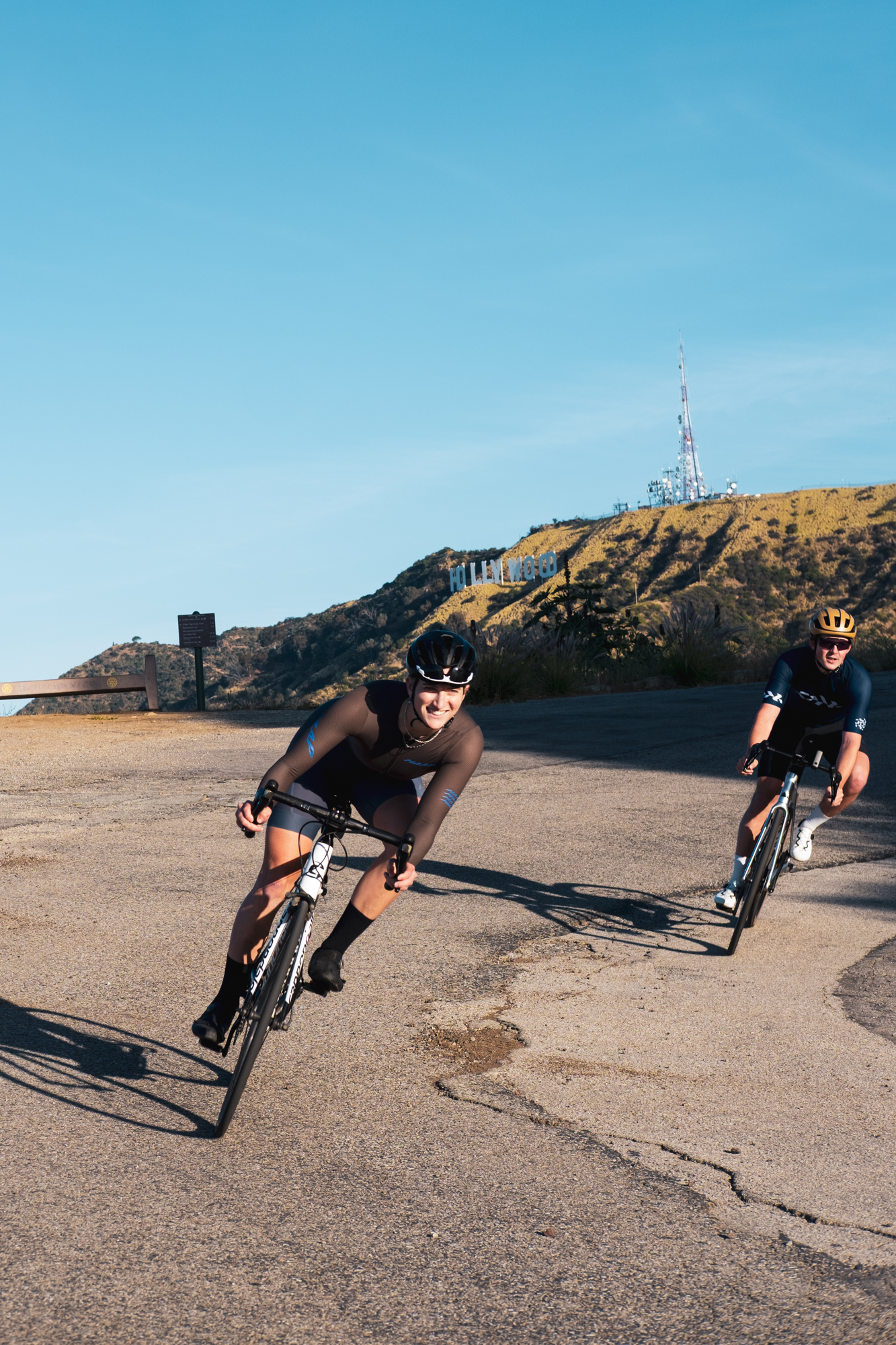
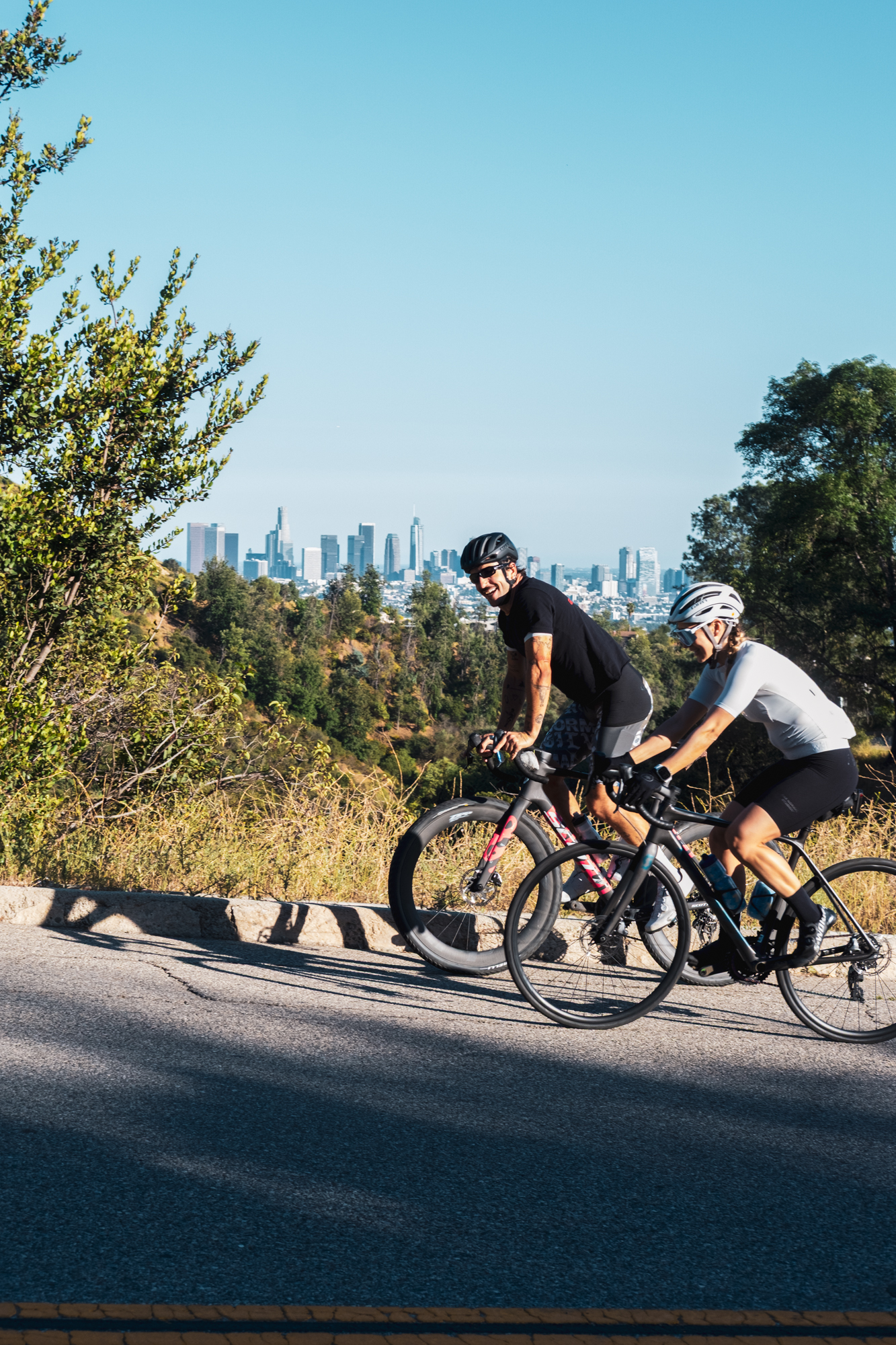
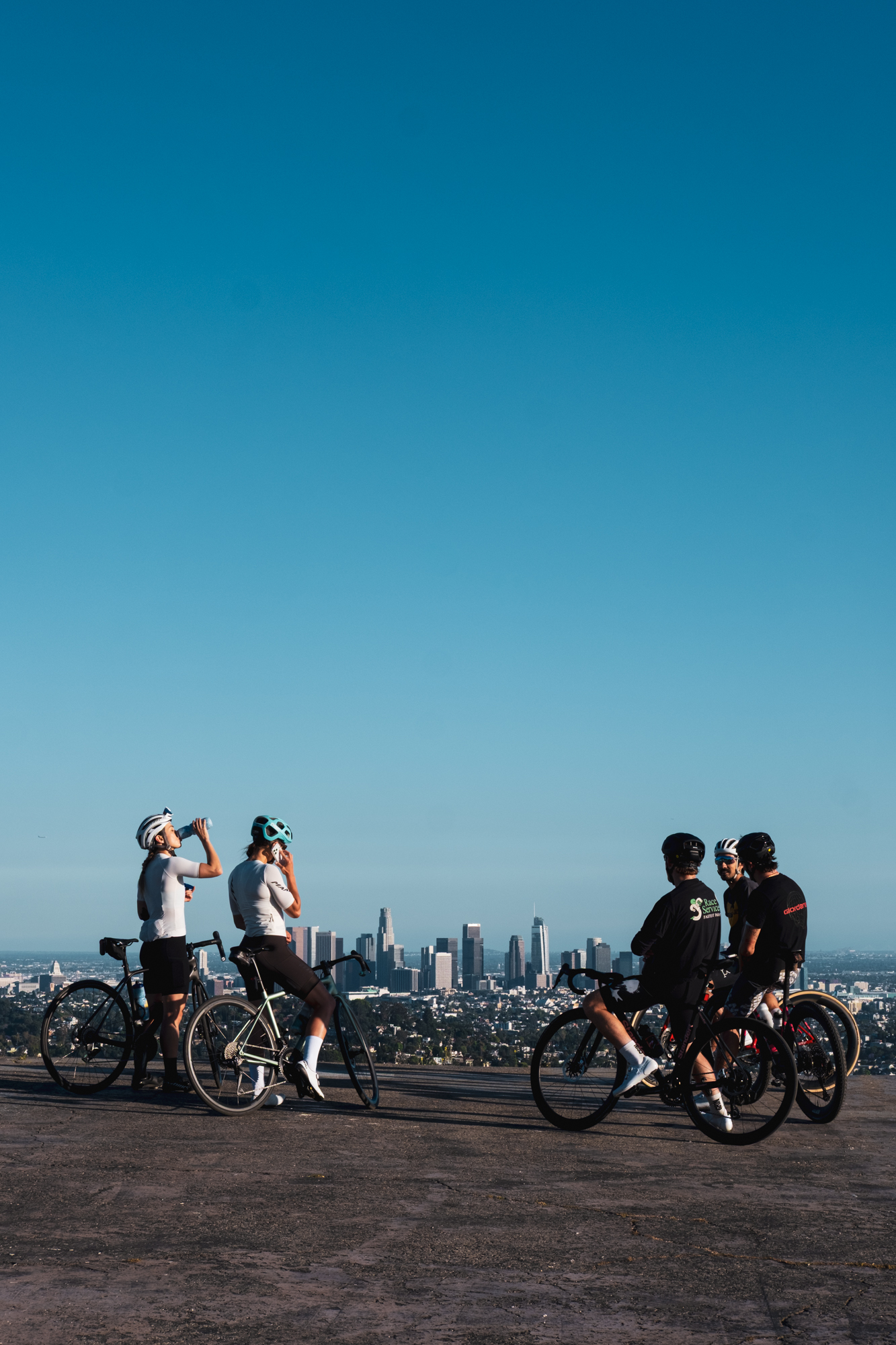
Riding in Griffith Park suddenly transforms your initial impression about cycling in LA. Within minutes, the noise fades away, replaced by winding roads and uninterrupted views across one of the world’s largest metropolitan areas. The climb to Griffith Observatory has become something of a pilgrimage for local cyclists. It isn’t especially long or particularly steep, but few urban viewpoints rival what awaits at the summit.
Standing beside the observatory, the contrast is remarkable. Behind you sits the iconic Hollywood sign. Below stretches the vast urban grid of Los Angeles all the way to the Pacific Ocean. It is difficult to imagine another city where such tranquillity exists only a handful of kilometres from downtown. Many visitors assume Malibu is where Los Angeles’ cycling begins. In reality, Griffith Park is where they first understand why so many people choose to ride here every single day.
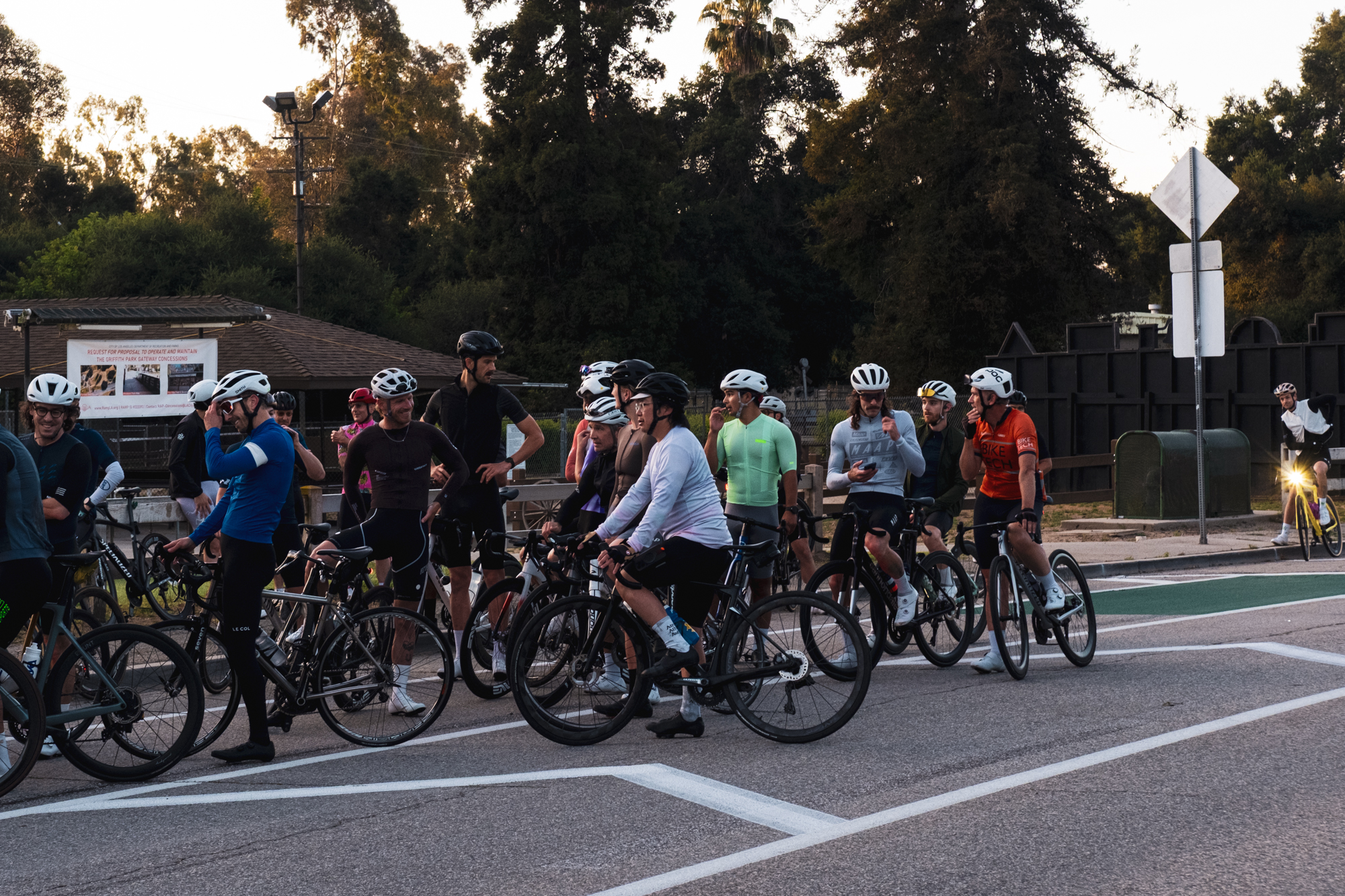
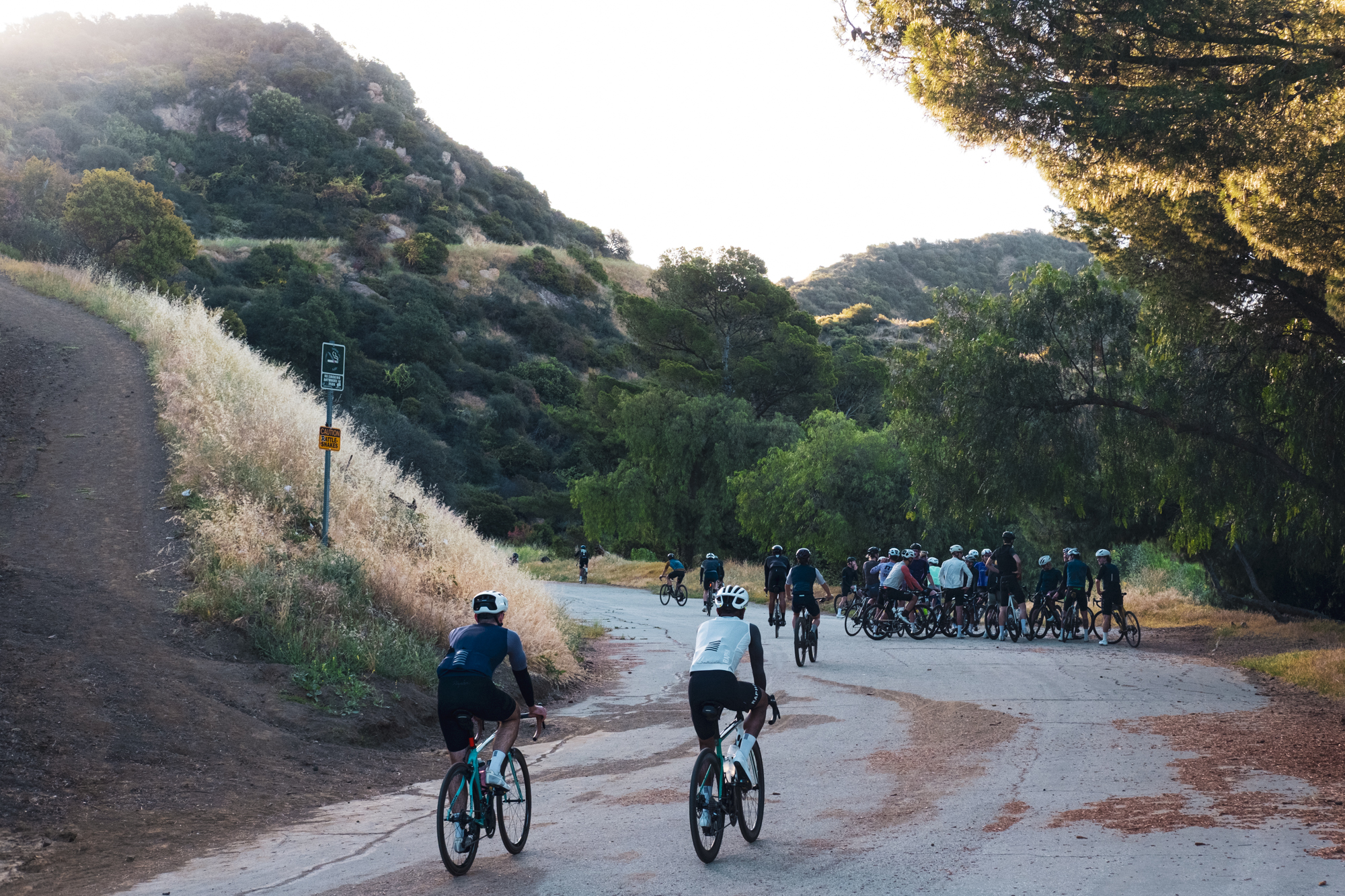
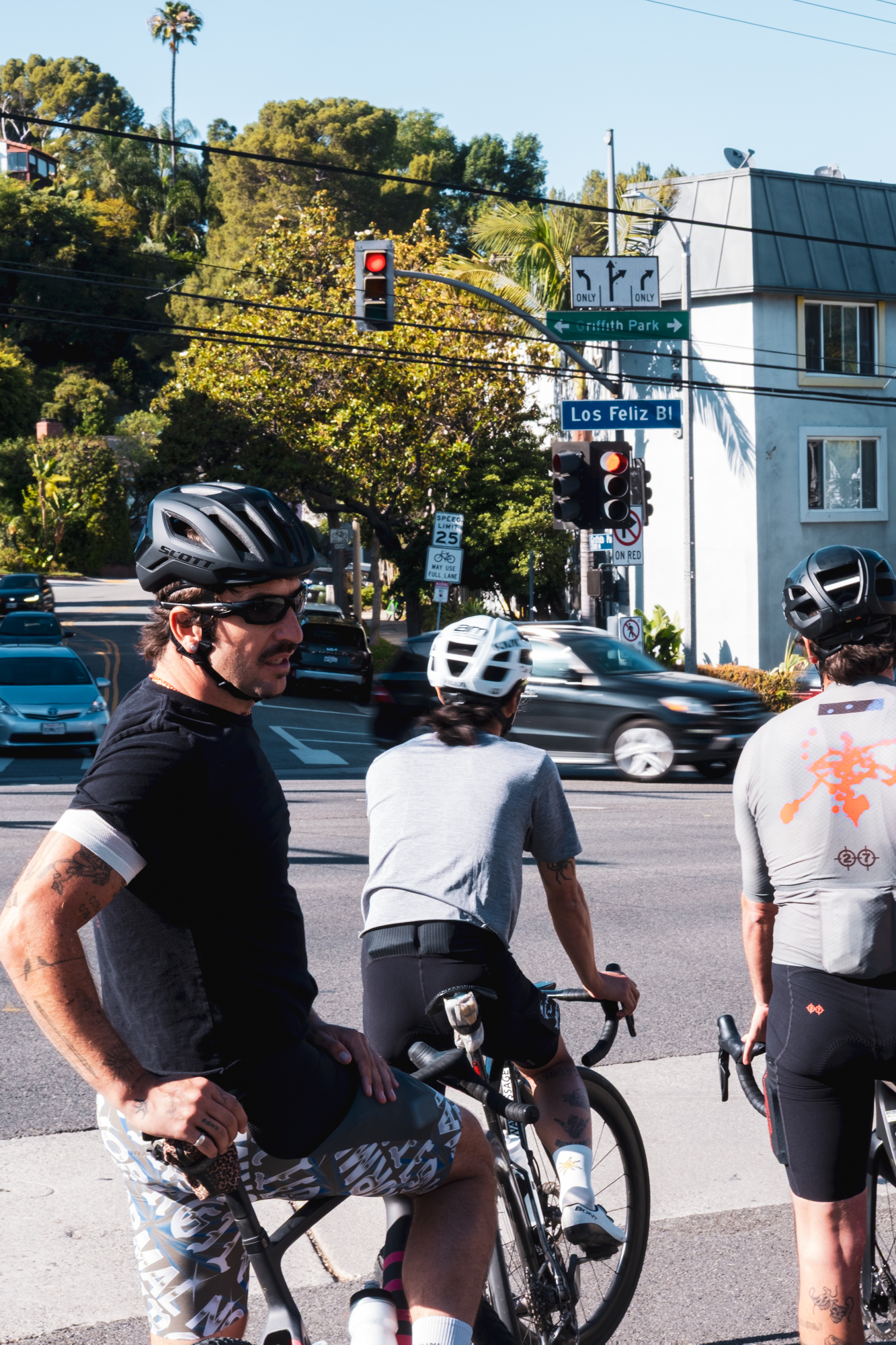
On Wednesday mornings, long before sunrise, dozens of cyclists quietly gather at the old Pony Rides area in Griffith Park. At exactly 6:30 AM, the group rolls away together. This is the legendary Panda Ponies ride.
Named in memory of John “Panda” Hermoso, a beloved member of the local cycling community, Panda Ponies has become one of Los Angeles’ defining weekly rituals. Riders of every ability arrive each Wednesday, from first-time visitors like us to local legends, including relevant people from different industries. Nobody receives special treatment. Everyone simply clips in and rides.
Climbs naturally split the bunch before everyone regroups at the top, conversations resume on the descents and, while some hurry to make it to work, others extend to the nearest café.
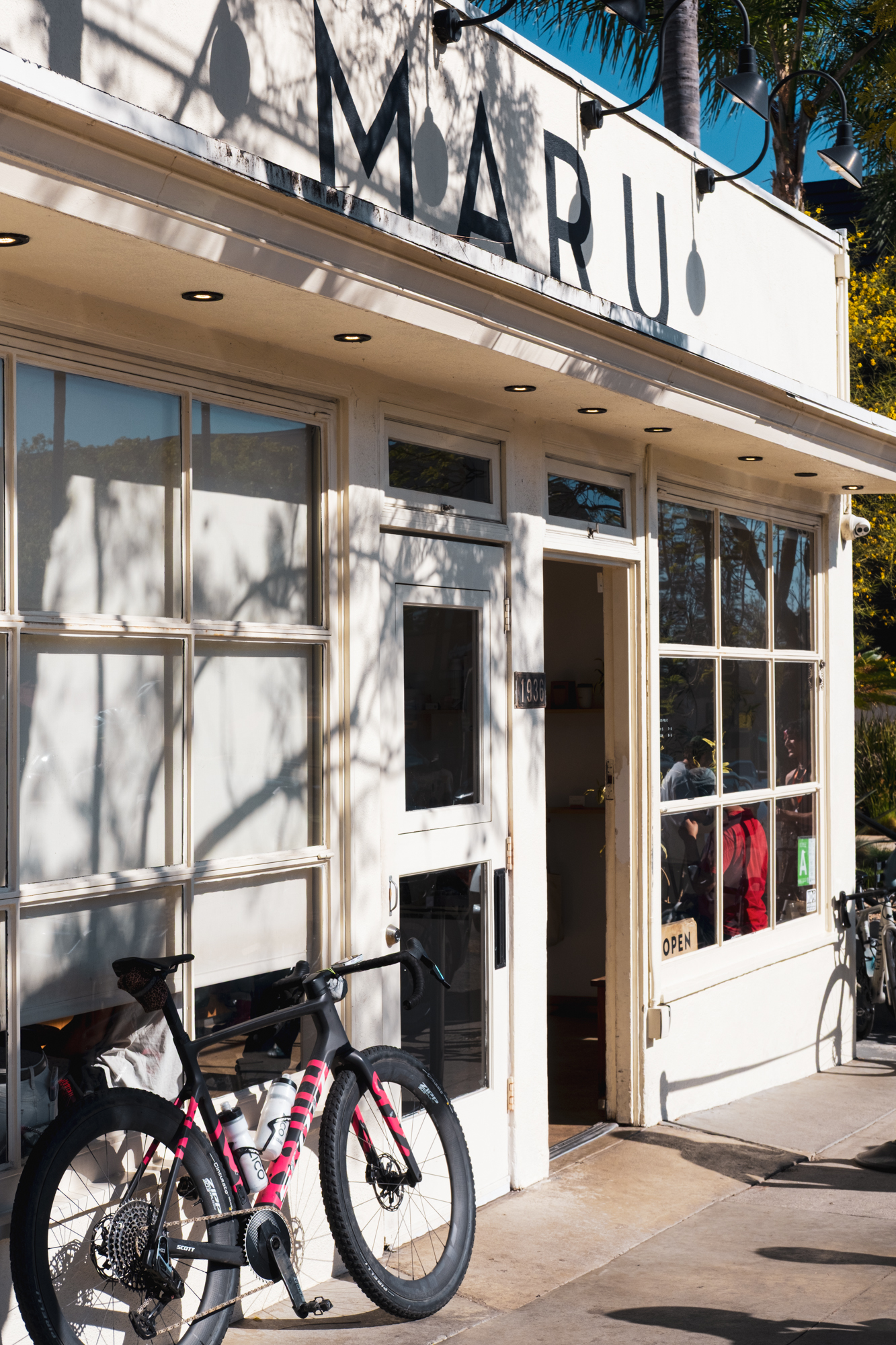
For those that cannot make it to the 6.30 AM start or that simply do not want to wake up so early, our friend Cesar Villalba started organizing Siesta Ponies, with a 4.30 PM start time. They meet at Maru Coffee on Hillhurst, and after riding along high palm trees, they link with the original route. If Panda Ponies finishes with a coffee, the ritual post Siesta Ponies is to eat burgers in Silver Lake.
We doubled down, as we attended both rides. Panda Ponies had a bigger turn up; Siesta Ponies was a smaller, more laid back group, with people riding in T-shirt, one of the characteristic traits of the local cycling culture.
Weekend rides
Every neighbourhood seems to have its own regular ride, organised through bike shops, cafés or simply groups of friends who have been riding together for years.
Saturday mornings offer almost endless possibilities. Riders gather outside neighbourhood bike shops like Luft, Maap LaB or Rapha. Cafés fill with cyclists discussing routes over espresso, while larger organised rides head towards the mountains mostly through Santa Monica.
Whether someone is searching for a relaxed social spin, an endurance ride into the canyons or something closer to a local race, there is almost certainly a group leaving within a few kilometres.
This decentralised culture is perhaps Los Angeles’ greatest strength. There isn’t one scene, but dozens, yet they all overlap. Riders move freely between groups, friendships extend across disciplines and visitors are always welcomed without hesitation.
If Griffith Park serves as the city’s local playground for the weekdays, Malibu is the go-to riding area for those that have more time on the weekend. The Pacific Coast Highway introduces riders to one of California’s most recognisable roads, hugging the shoreline beneath dramatic cliffs and endless ocean views. Early mornings remain the ideal time to experience it, before traffic begins to build.
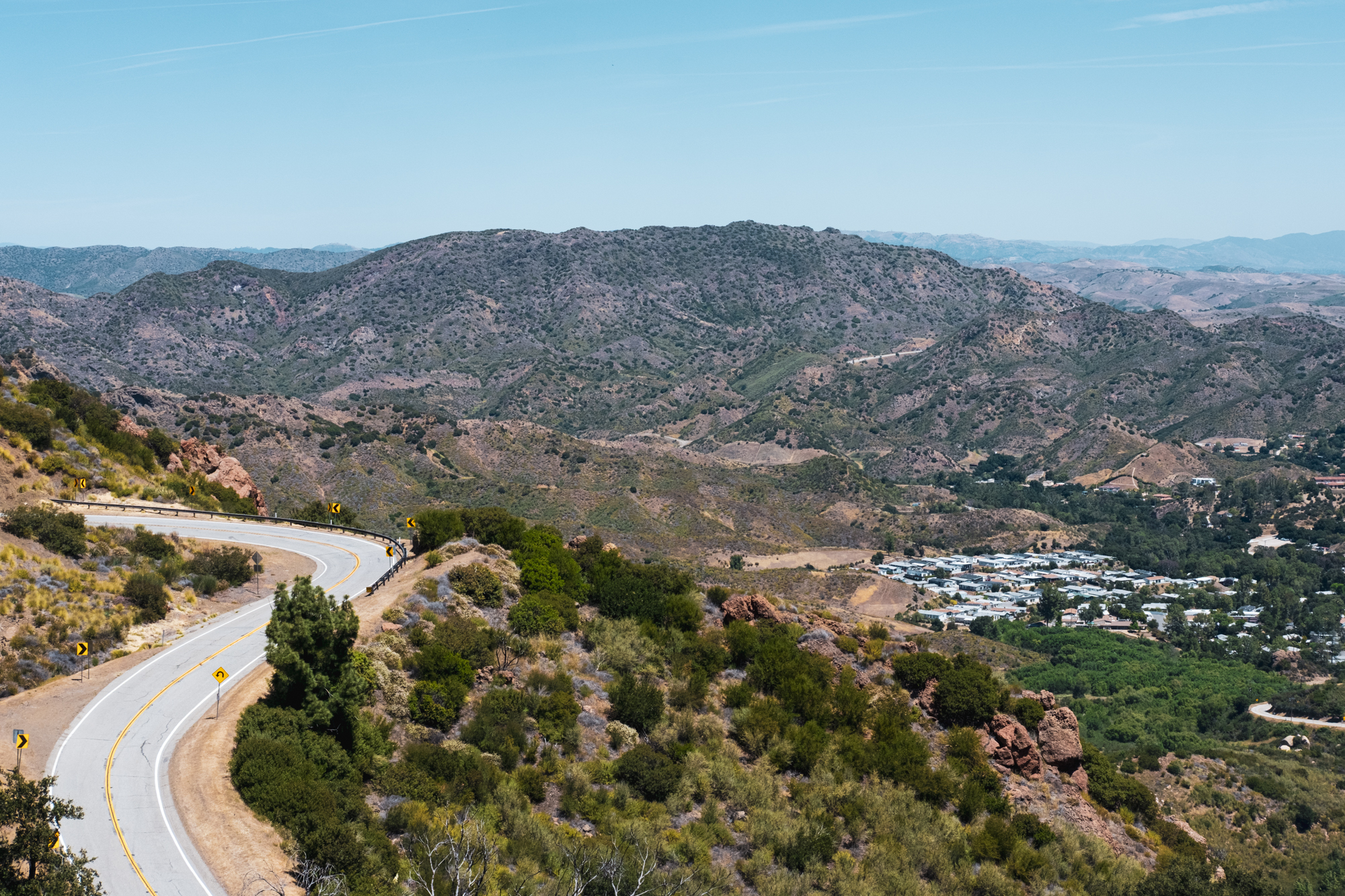
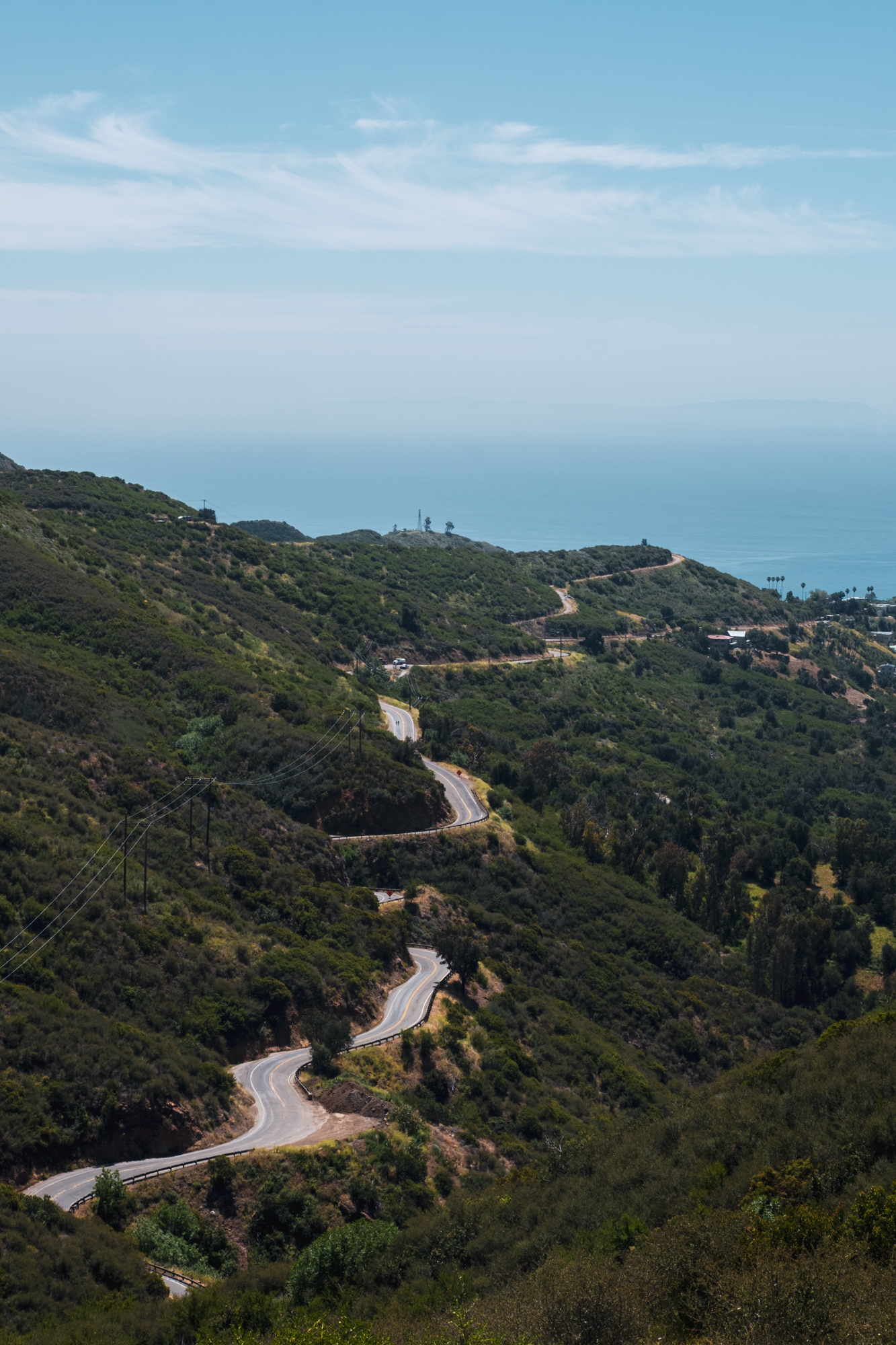
But the coastline is merely the gateway, as the real riding begins once the road turns inland. The Santa Monica Mountains rise abruptly from the Pacific, creating a maze of canyon roads that have become legendary among cyclists worldwide. Every climb possesses its own distinct personality.
Latigo Canyon is perhaps the benchmark. Over dozens of flowing switchbacks, the road steadily climbs away from the ocean through dry hillsides and scattered ranches before eventually reaching the ridgeline. That’s where we came across Reggie Miller, NBA Hall of Famer and now cycling aficionado. Given his height, it was easy to recognise him.
Nearby, Mulholland Highway offers something entirely different. Rather than a single defining ascent, it unfolds as a continuous sequence of rolling terrain, technical corners and panoramic ridgelines overlooking both the Pacific Ocean and the San Fernando Valley.
Encinal Canyon, Decker Canyon and Tuna Canyon each provide their own interpretation of the Santa Monica Mountains. Together, they can be linked into loops that deliver thousands of metres of climbing without ever feeling repetitive. Climbs alternate with fast descents, shaded valleys give way to exposed ridgelines, and almost every route eventually returns riders to the ocean. Our suggested route combines several of them for a proper day out in California.
Is there gravel around LA?
Between Santa Monica and Malibu lies an intricate network of fire roads connecting state parks, remote viewpoints and ridgelines that remain invisible from the highway below. The off-road paths in Griffith Park are not allowed for bikes, but Topanga State Park offers one of the most accessible introductions, blending smooth gravel roads with spectacular rock formations and rolling terrain suitable for gravel bikes.
More adventurous riders head towards the Backbone Trail network, Bulldog Motorway and the countless dirt roads traversing the Santa Mónica Mountains. It is possible to spend several hours riding gravel while remaining only a few kilometres from the Pacific Ocean.
Few places offer such a striking contrast. One moment you’re sipping coffee beside the beach, the next you’re climbing silent fire roads where the only sounds are tires crunching over decomposed granite and hawks circling high above.
For a taste of it, our highlighted gravel route is the Dirt Church ride from Domestique Cycling Club, which heads towards the top of Sullivan Fire Road and, after following Mulholland Drive for a few kilometers, returns to Santa Mónica via Westridge Fire Road.
Soon in everyone’s word of mouth
And hanging over every ride is the anticipation of 2028. Los Angeles will host the Olympicsonce again, and while the full road race route has yet to be officially unveiled, the possibilities alone are enough to excite cyclists around the world. The LA28 Organising Committee recently confirmed Venice Beach Boardwalk as the start, while the finish will be atop the Griffith Observatory. There has been plenty of speculation about which climbs around Malibu will be tackled, but for now the only certainty is that in July 2028, the world will get to see what the city has to offer for cycling enthusiasts.
Los Angeles isn’t a place where cyclists simply tolerate the traffic in order to reach good roads. Cycling has become woven into the city’s identity. It lives in the Wednesday morning rituals of Panda Ponies, in the dozens of Saturday rides leaving neighbourhood cafés before dawn, in the conversations outside bike shops, and in the endless stream of riders climbing towards the hills while the rest of the city is only beginning to wake.