Life Time Grand Prix goes to $800,000 for 2027, and pays deeper than ever
Tiempo estimado de lectura: 6 minutos
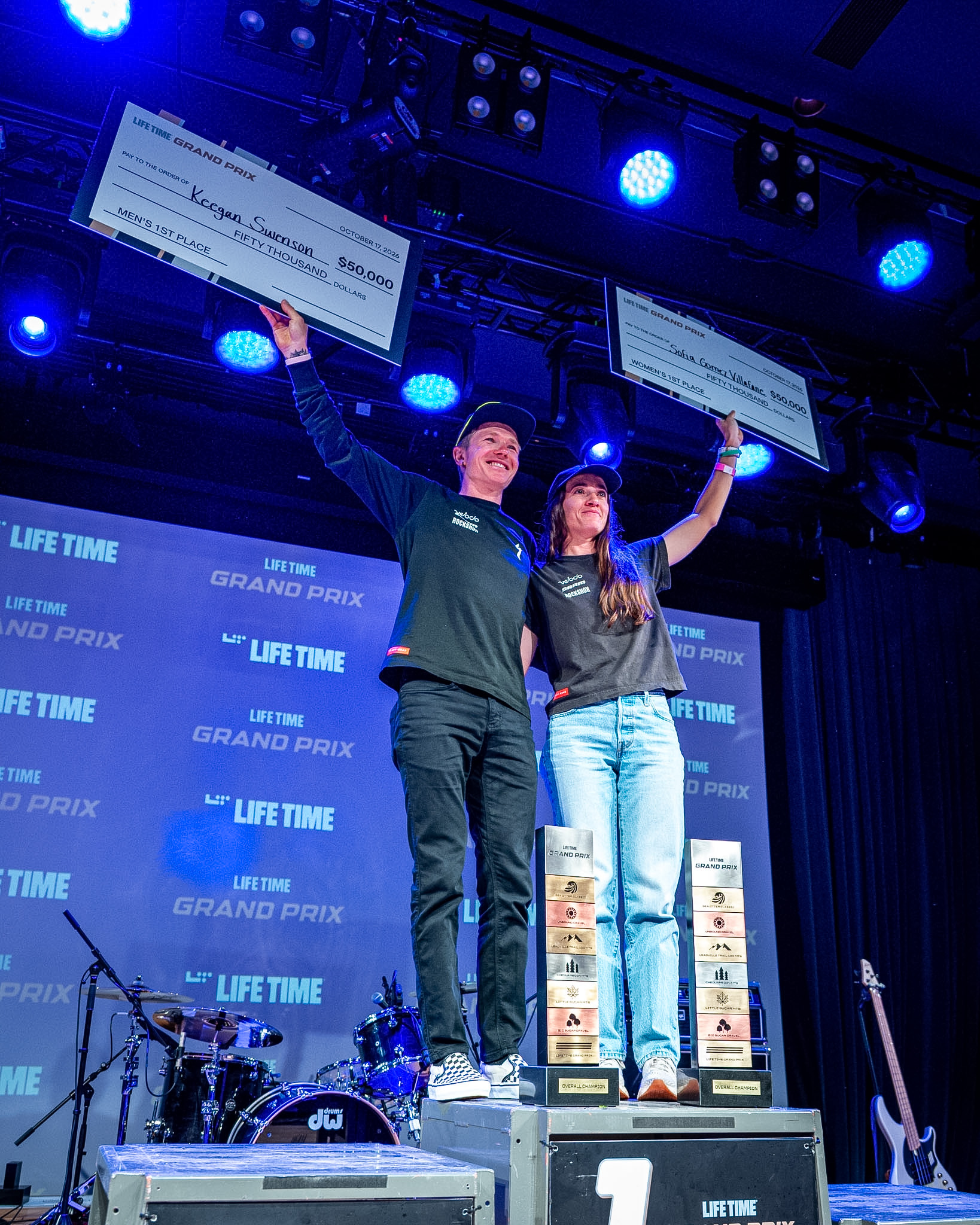
Life Time has put the biggest prize purse in off-road racing back on the table. The 2027 Life Time Grand Prix will pay out $800,000, a 36% increase compared to this season, and the largest sum the series has committed in its six editions. As always, every dollar will be split equally between the women’s and men’s fields. For the first time, Life Time has spent its raise not on making the winners richer, but on rewarding the riders behind them.
“If we want professional off-road cycling to grow, we have to get serious about how athletes make a living,” said Michelle Duffy, co-director of the Grand Prix. “We all know the traditional sponsorship model leaves a lot of talented riders without the financial support they need.” Her answer is to put “more money into every race and spread those dollars deeper into the field”.
Where the money goes
The purse is cut into two halves. The first $400,000, up from $350,000, goes to the overall standings and still pays ten deep in each field, but the curve has been flattened. A rider who finishes seventh in the series now earns more than a third of what the winner does, which is a very different proposition for a privateer weighing up a season in the United States. Below the top ten, every rider who completes the series in 11th to 25th place receives a $2,500 finisher bonus, a scheme introduced this year.
The second $400,000 is spread across the seven races, and here the change is structural. Each race used to pay only its top five. In 2027, every round pays its top ten in both fields. The three marquee events, UNBOUND, the Leadville 100 and the Big Sugar finale, each carry $80,000, which means $10,000 to the winners and $500 to tenth place. UNBOUND and Leadville rise from $60,000, while Big Sugar jumps from $30,000, a clear sign that Life Time wants the overall title decided in front of a full payroll. The other four rounds, the Sea Otter Classic, the Chequamegon MTB Festival, Little Sugar MTB and the returning The Rad Dirt Fest, are worth $40,000 each, with $5,000 for the winners.
The field stays at 25 women and 25 men, but the way in has changed. The top ten in the 2026 overall standings and the best U23 rider of each gender are invited automatically. The other fourteen places in each field are no longer handed out through applications and wild cards, but earned on the road at a new Sea Otter Grand Prix Qualifier, which combines the Sea Otter Classic Gravel race on the Thursday with the Fuego XL mountain bike race on the Saturday of the same April weekend. Riders must start at least six rounds, and their best six results count, so anyone who races all seven can drop their worst day.
A different order of magnitude
The timing is pointed. A week ago, Klassmark unveiled The Traka World Series, a seven-round gravel championship across Europe and the Americas with €76,000 in prize money: €8,000 per round and €20,000 for the final standings. Both series have seven events, and both pay women and men the same. That is where the resemblance ends. At current exchange rates, Life Time’s purse is around nine times larger, and even its smallest round, at $40,000, is worth roughly four times a full Traka World Series event.
The bigger difference is what the two series ask riders to be good at. The Traka World Series is gravel only, and most of its rounds reward physical skills over technical ones. The Grand Prix is built, in the words of Life Time’s events president Kimo Seymour, to find “the best all-around off-road racers.” Three of its seven rounds are mountain bike races. Leadville is a 100-mile effort at altitude above 3,000 metres, where climbing at threshold in thin air matters more than bike handling. Chequamegon is a short, fast mass-start race on the forest trails of Wisconsin, closer to a road race on dirt. Little Sugar, in Bentonville, is the most technical of the three, with real singletrack where a gravel specialist can lose minutes. Add the Fuego XL race that now counts toward qualifying, and a rider without real mountain bike skills will find it hard to even make the Grand Prix field.
Which series should a gravel rider target?
For an American rider with a mountain bike background, the answer is simple. The Grand Prix pays more, it races close to home, and its mix of disciplines plays to an all-rounder’s strengths. The flatter prize curve makes the case even for riders who know the first place is unreachable.
For a European gravel rider, the maths is less obvious. The Grand Prix money is real, but so is the price of a season in the United States: flights with bikes for six or seven trips, several weeks at altitude before Leadville, and a mountain bike programme that a pure gravel racer may not have. Then there is the qualifier. Unless they finished in this year’s top ten, a European rider must cross the Atlantic in April and post results in both a gravel and a mountain bike race just to earn a place. The Traka World Series pays a fraction of that, but it keeps most of a season within reach of home, and costs far less to contest.
Doing both will be hard. Sea Otter and The Traka’s international event both fall in the first half of April, and in October the Big Sugar finale lands in the same month as The Last Dance. However, most 2027 dates are not yet confirmed. Because the Grand Prix demands six starts out of seven, a rider who commits to it will have little room for a European campaign, and the reverse is true for a rider chasing The Traka World Series’ overall title.
The likely outcome is a split. The Life Time Grand Prix will remain the target for North American pros and for Europeans with the results, the mountain bike skills, and the backing to move across the Atlantic for a season. The Traka World Series will become the home of Europe’s gravel specialists, along with riders who want to race gravel without learning to love singletrack.