Tailfin’s new Journey Rack brings its bikepacking vision to a wider audience
Estimated reading time: 4 minutes
When Tailfin launched its original AeroPack system nearly a decade ago, it changed the way many riders thought about carrying gear on a bike. The industry quickly took notice, and since then, axle-mounted racks and hybrid cargo systems have appeared everywhere, with brands racing to offer their own interpretation of the idea Tailfin helped popularise.
While the original carbon AeroPack became something of a benchmark product, its premium price tag inevitably kept it out of reach for a large number of riders. The Alloy Rack was the more affordable version, and this best-selling product now has a successor. With the launch of the new Journey Rack which we saw first at Sea Otter Classic, Tailfin offers a more versatile and compatible rear rack system that brings much of the brand’s signature functionality to a broader audience.
A new chapter beyond the alloy rack
The British company is careful to position it as far more than a simple update. According to Tailfin, nearly every major component has been redesigned following years of rider feedback and real-world testing.
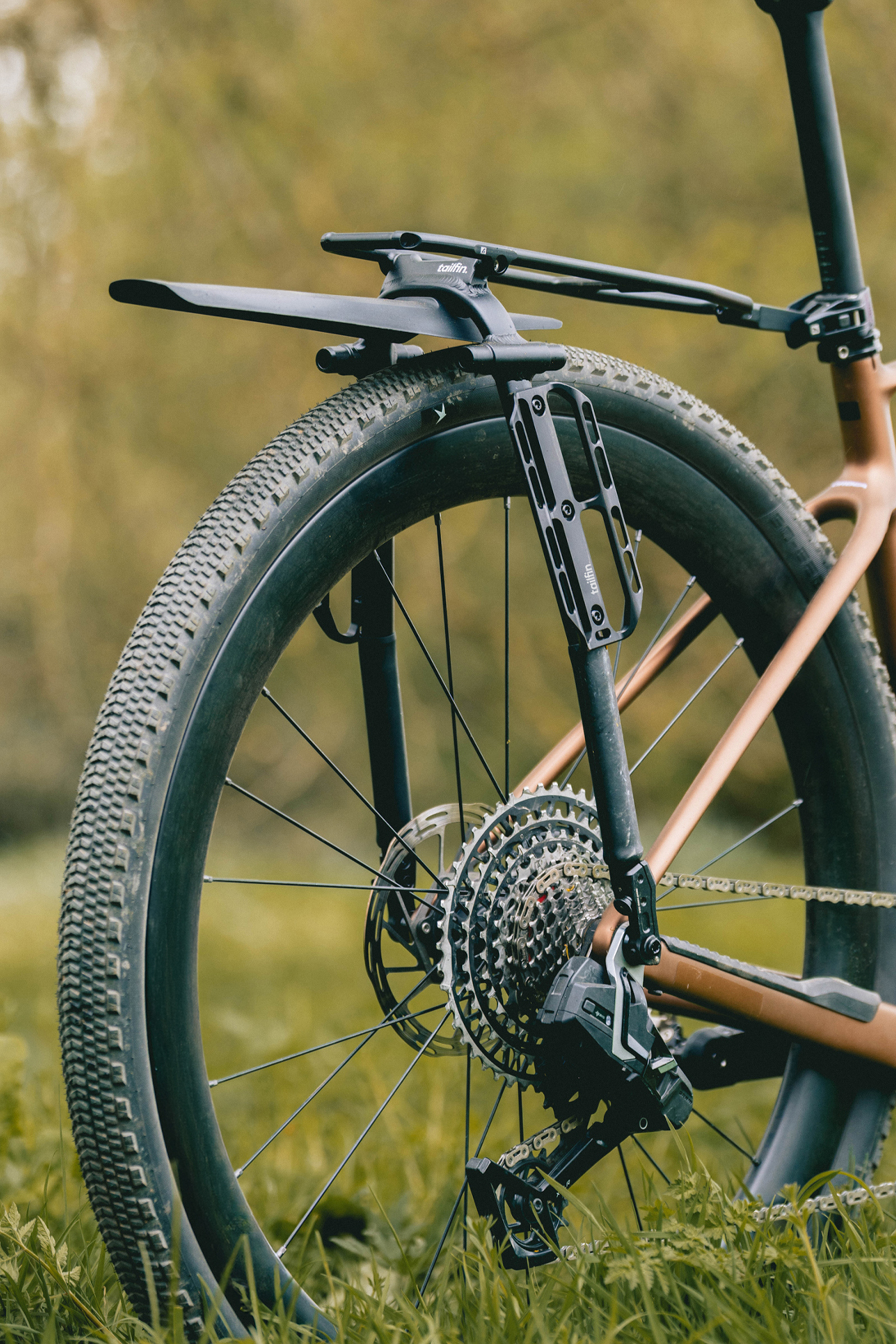
Constructed from 6061-T6 aluminium rather than carbon, the Journey Rack sacrifices some of the exotic appeal of the brand’s flagship systems, but it compensates with practicality, modularity, and a notably lower entry price. And importantly, it does so without abandoning the features that made the brand relevant in the first place.
For those with varied bikes and ride preferences
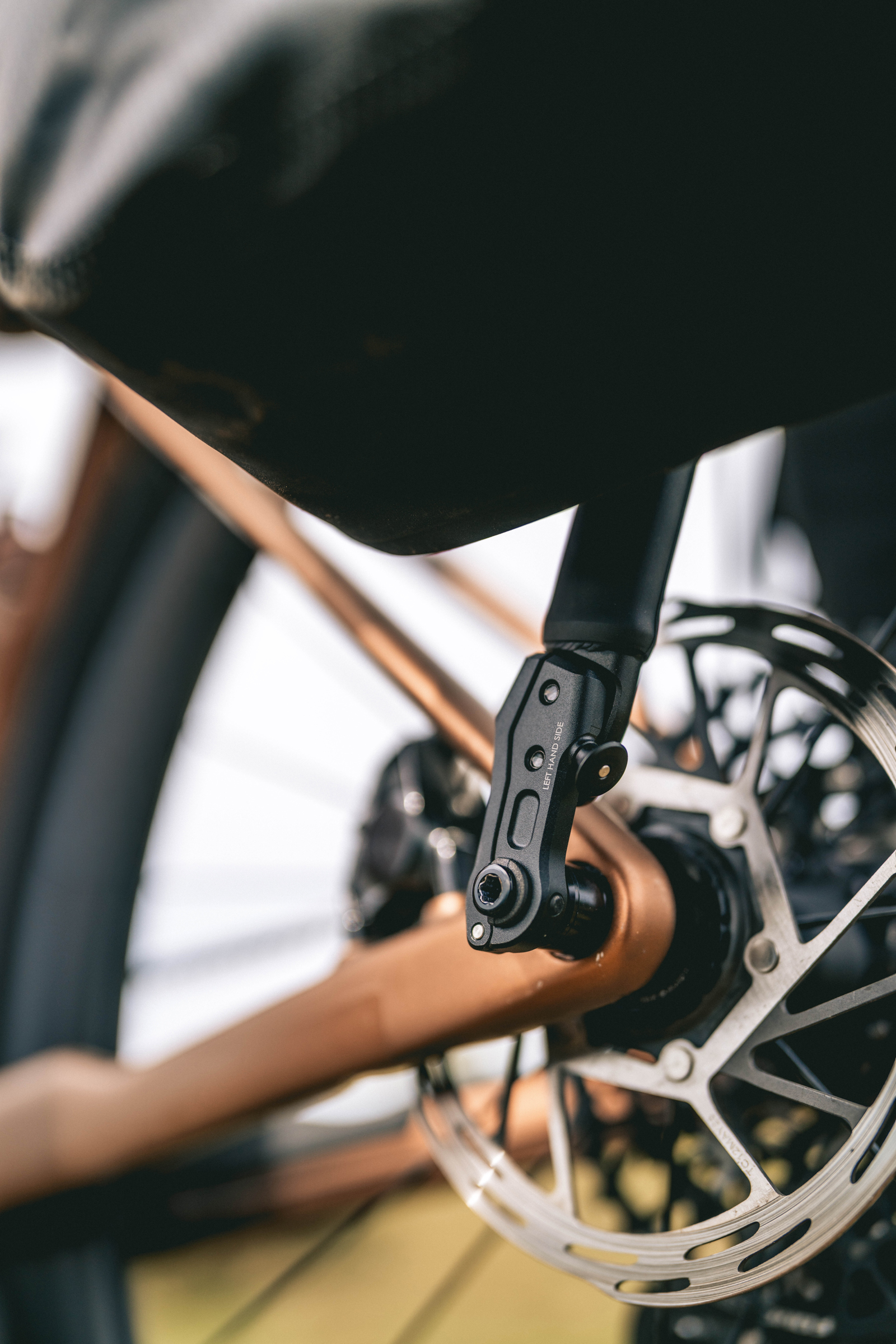
One of Tailfin’s biggest strengths has always been compatibility. While many racks still struggle with aggressive gravel geometries or full-suspension mountain bikes, the Journey Rack continues to build around Tailfin’s patented axle-mounted architecture.
Instead of relying primarily on frame eyelets, the load is transferred through the rear axle and wheel, reducing stress on the frame itself and allowing the rack to work across an enormous variety of bikes.
For riders switching regularly between unloaded day rides and fully equipped adventures, the quick-release functionality remains one of the standout features. Tailfin claims the Journey Rack can be installed or removed in seconds without tools, while still allowing fast rear wheel removal during puncture repairs. That’s an area where many competing axle-mounted systems still fall short.
More utility, more modularity
The new aluminium top deck offers a larger and more stable cargo platform, while triple mounting bosses on each side open the door to cargo cages, dry bags, or additional accessories. The rack also supports traditional panniers from other brands, alongside Tailfin’s own luggage ecosystem.
That broader compatibility feels particularly relevant at a time when many cyclists are mixing commuting, gravel riding, light touring, and bikepacking into the same bike setup. Rather than forcing riders into a fully proprietary system, the Journey Rack seems designed to adapt around existing equipment. Additionally, it is the only rear rack with quick-release that is also foldable.
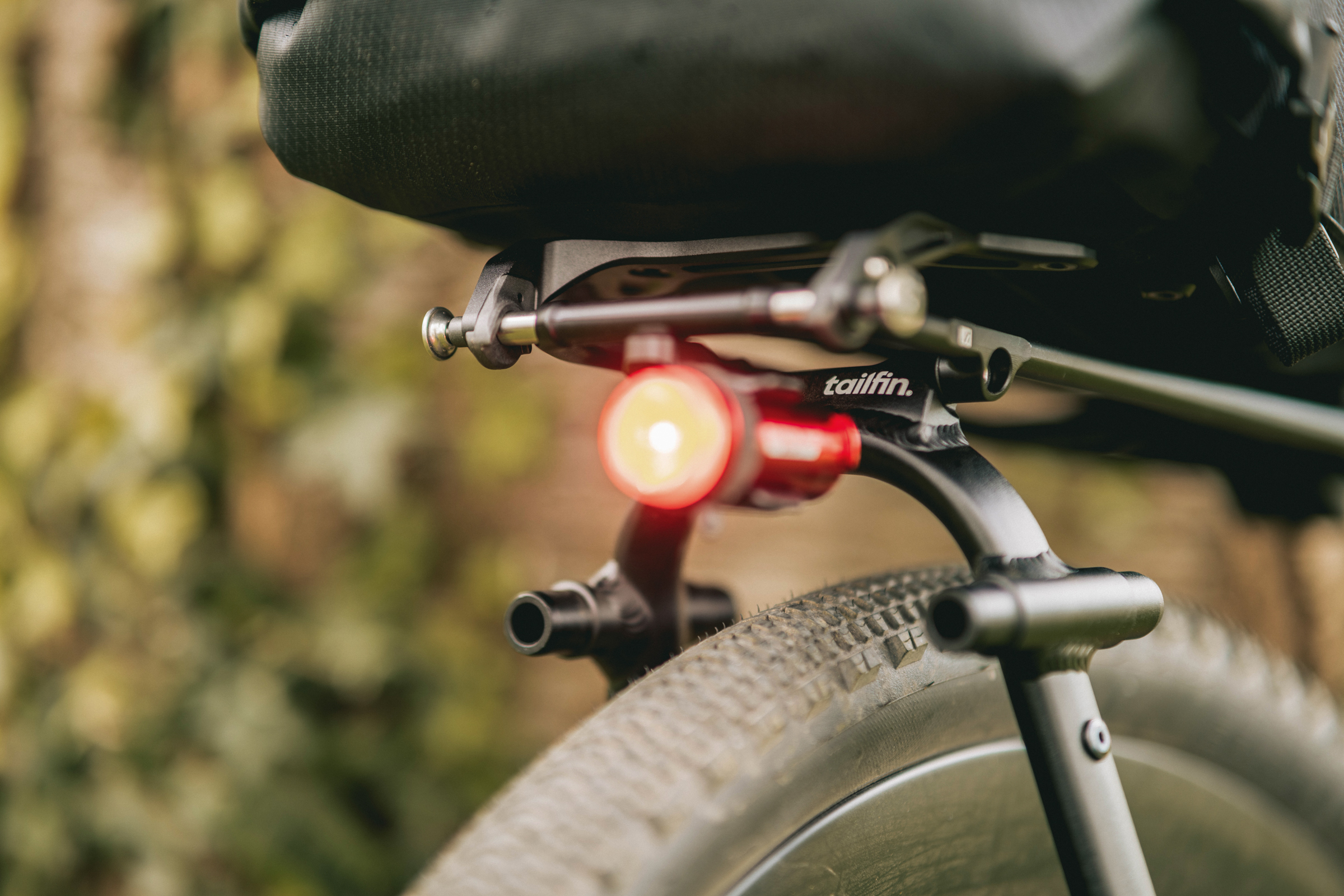
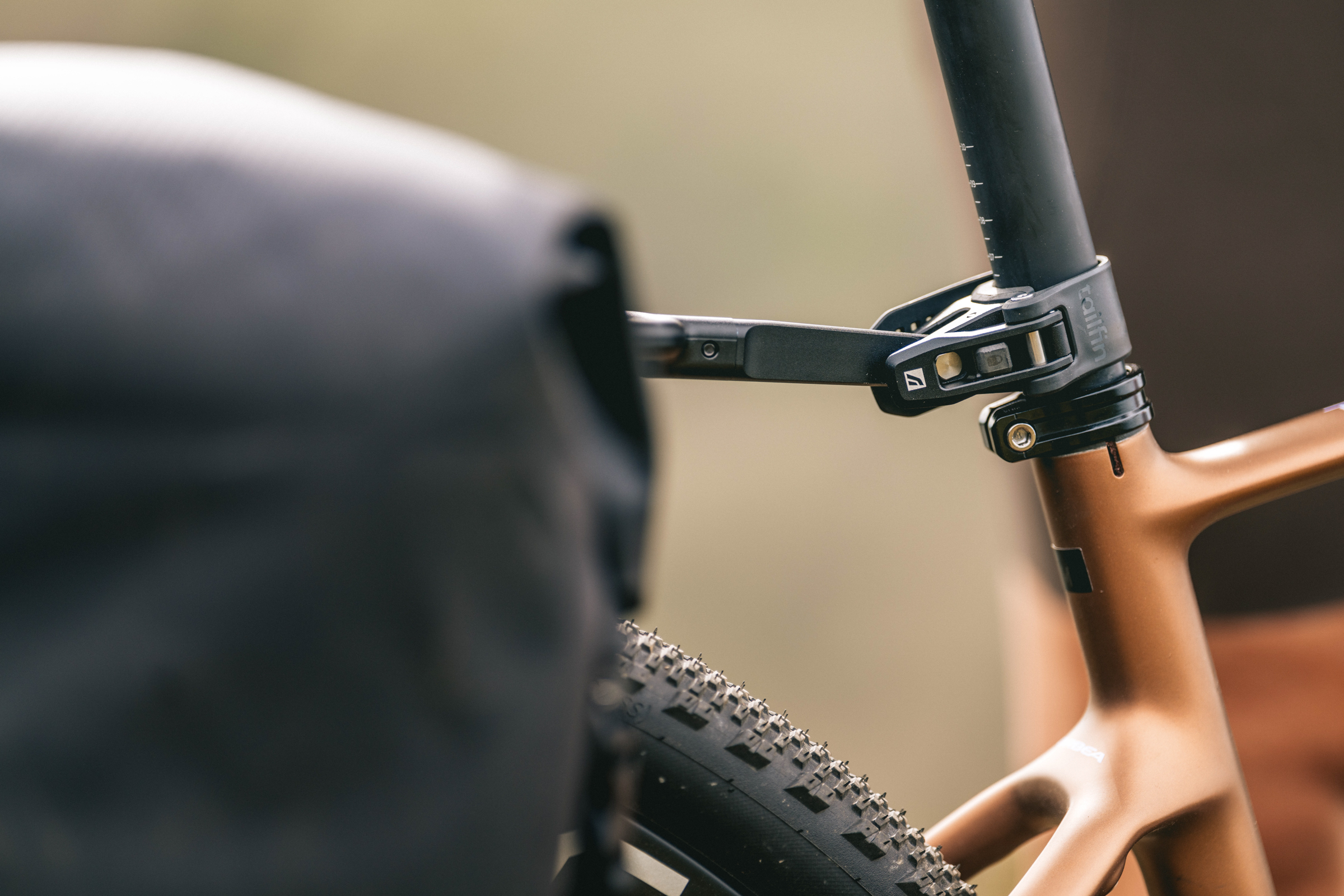
We also appreciate the optional light mounting options, as until now we didn’t know where to place our rear light. Another personal painpoint has been solved by replacing the old seatpost connector with a V mount system version.
Tailfin has addressed long-term durability with a fully modular construction that avoids permanently riveted plastic parts. Individual components can be replaced or serviced over time, something increasingly appreciated by riders investing in premium gear expected to survive years of hard use.
Perhaps the most interesting aspect of the Journey Rack is how little Tailfin appears willing to compromise despite the lower price point. The pannier version carries up to 32kg while weighing 740g, figures that place it competitively against many established quick-release racks on the market. The non-pannier version drops to just 580g while still supporting 22kg of load.