Ultrashooting: Challenges of unsupported races from a media crew POV
Estimated reading time: 11 minutes
After what has recently happened at The Traka Adventure and Trans Balkan Race, it seems increasingly difficult to preserve the self-supported principles of ultracycling events. Below, photographer Edoardo Frezet reflects on the many interpretations and nuances of psychological support, focusing on the role of the media crew and the impact they may have on the riders they cover.
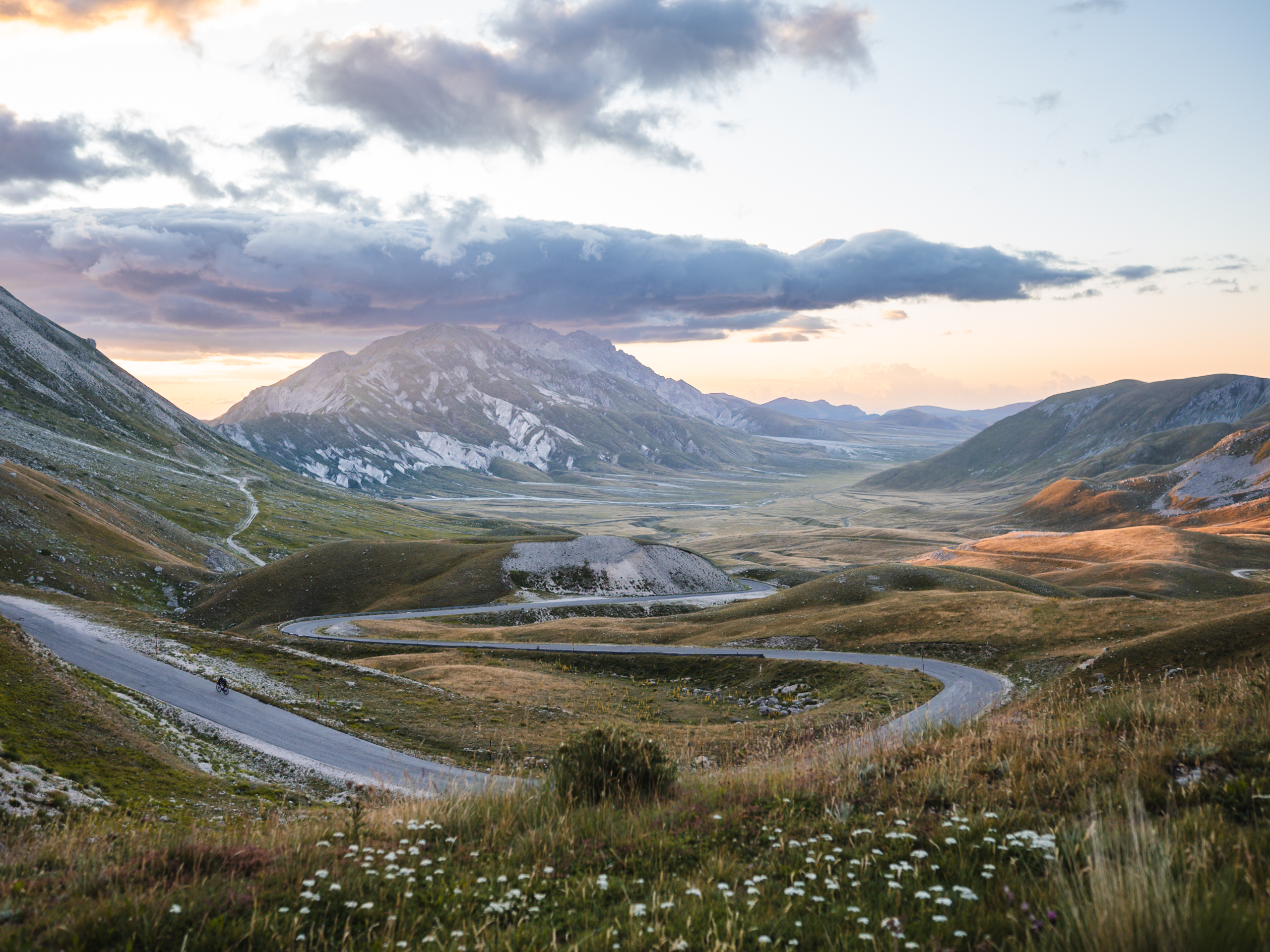
It’s over. Just before midnight, in Amerongen, Marco, Francesco and I hit the road one last time, and headed home. Over the previous two weeks we drove for 9,500 km, starting from Giovinazzo, in southern Italy, and across central Europe. We chased the more than 100 riders that took part in the second chapter of VIA Race, an unsupported, free-routing, paved, 4,000 km long race.
Marco took care of videos, while Francesco managed the social media. I was the photographer in charge of the overall media plan. This, in part, is history repeating. In summer 2024, I covered the second half of VIA with Ryan le Garrec, driving a tiny car loaded with our gear and our bikes.
The first chapter started in Southern Spain and reached Giovinazzo, following Hannibal’s march against Rome across the Pyrenees and the Alps. The second started in the same town to go North, along Germanicus’ route. A race inspired by history and conceived to provide adventure to all participants.
It is always exciting to witness history, no matter how small it is. Documenting so many stories along the road has been even more interesting and rewarding, but also complex to assimilate. What follows are a couple of reflections inspired by two years of coverage of VIA, but apply to most ultracycling shootings. It’s also the closest thing to a self-evaluation process. Thinking and writing about it allows me to clear my mind about my role in this specific niche.
Each photo opportunity presents challenges that are specific to the media team: sometimes, it’s very hard to find the rider; other times, the story implies ethical dilemmas. Here, I try to share some significant events, their weight in the wider picture, and the approach from behind the scenes.
Adam Bialek and the ethical dilemma
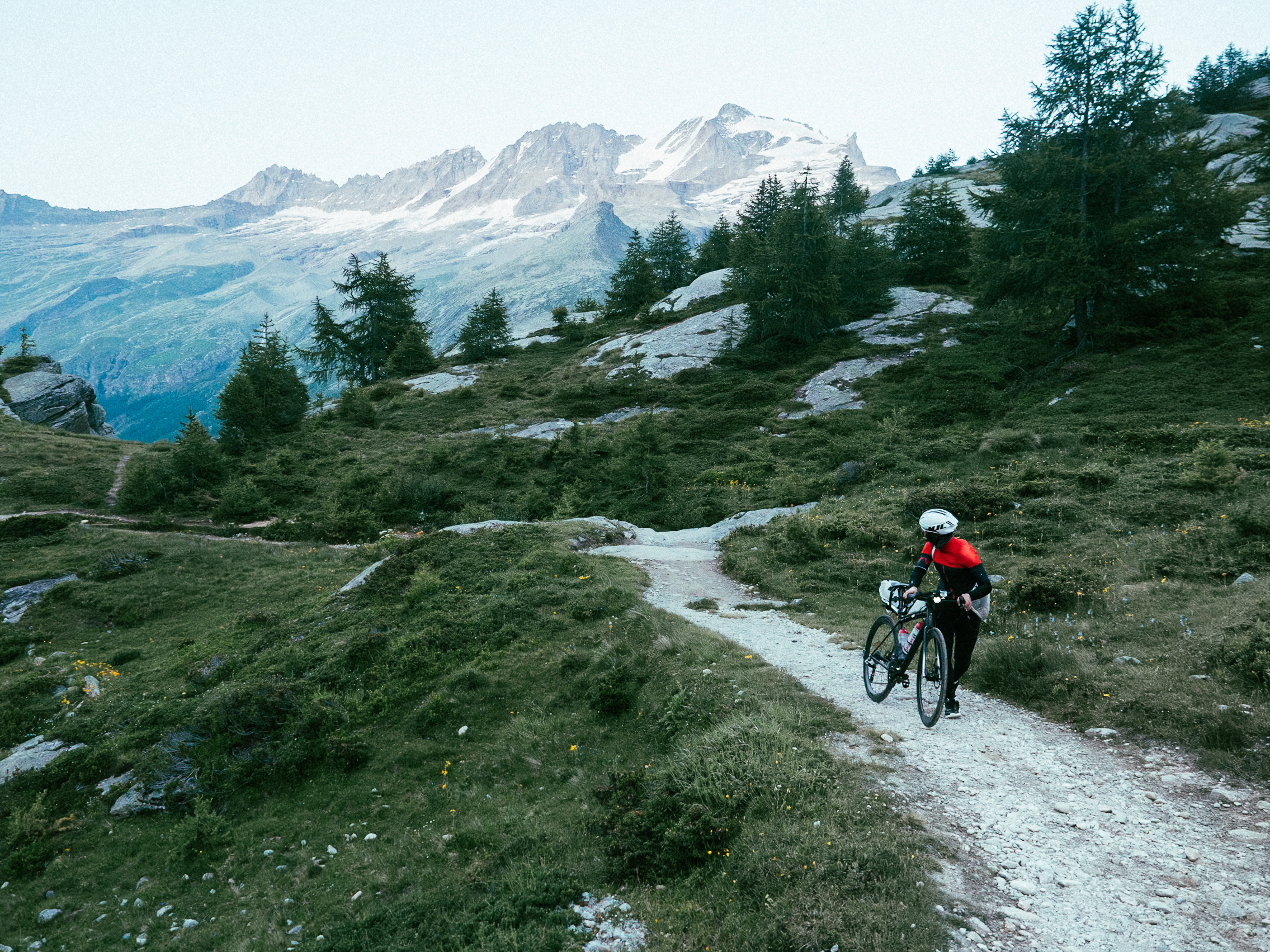
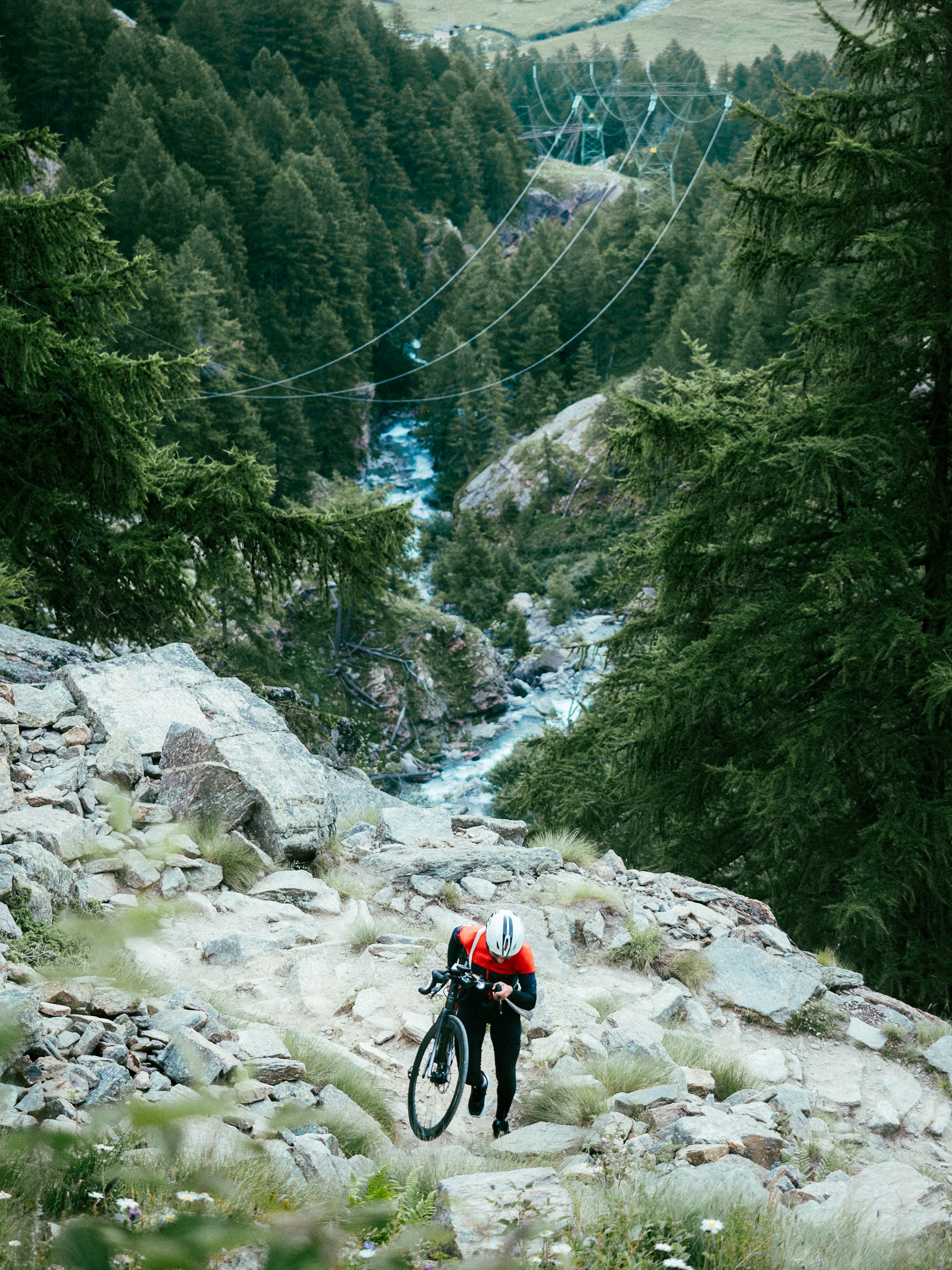
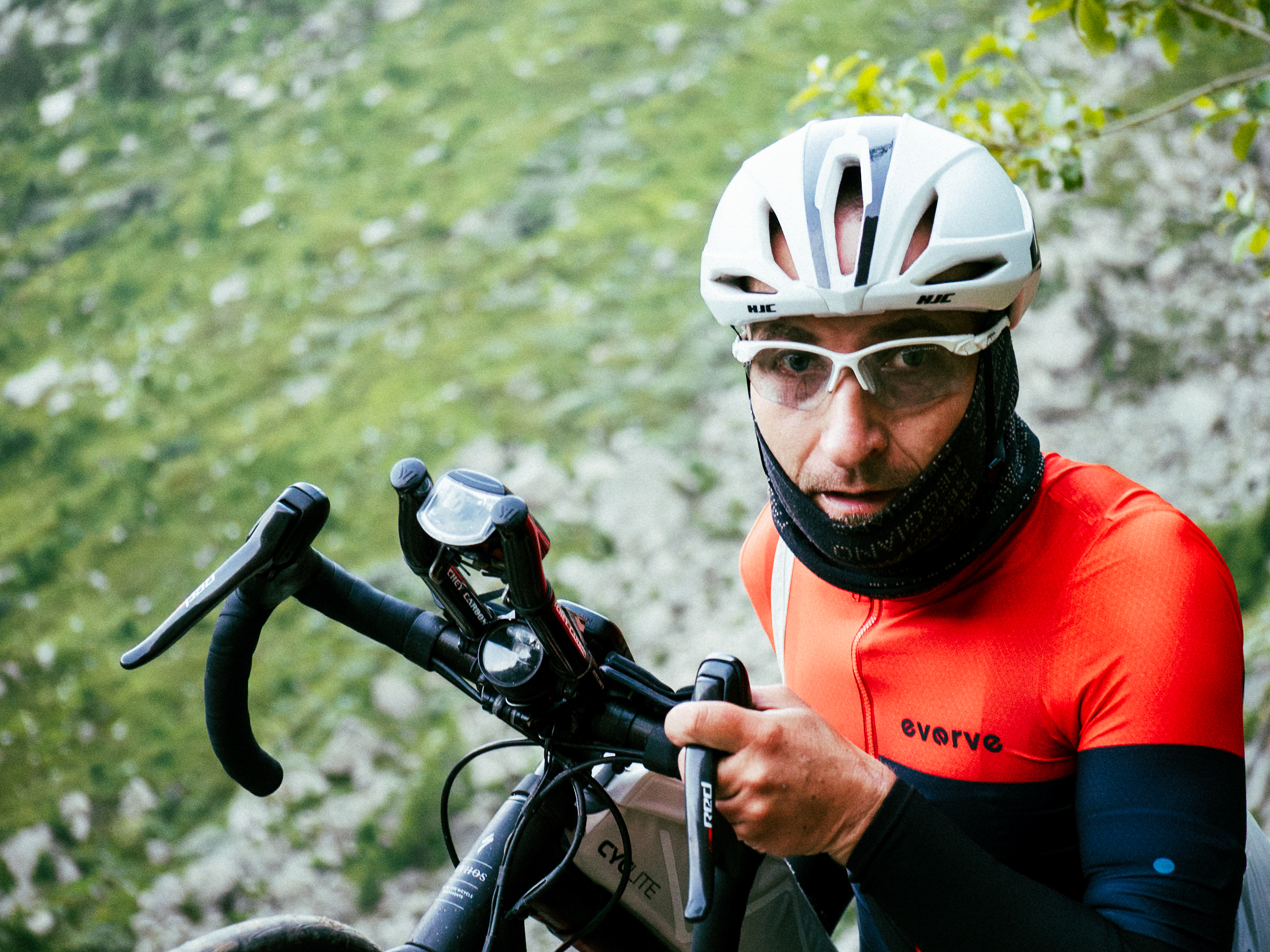
The first challenge is up there on Colle del Nivolet, close to my hometown of Turin. Adam is the first to cross the Alps from France to Italy, where my assignment begins. I’m excited: since 2019, when I started Cicloreporter, one of my goals has been to shoot ultras, no matter road or gravel. I studied avidly the coverage of Silk Road Mountain Race, Atlas Mountain Race, and of course the many Tour Divide reportages.
Now, I’m here shooting an ultra, and I am equally excited and scared. Even more so since James Robertson, author of It’s a Race, coordinates the media crew, which is also very experienced. According to the plan, I must take the baton from the French team when the riders passed the border to Italy. I should spend a couple days around the Alps Refuge, the Velodromo of San Francesco al Campo, and then follow the first half of the riders with Ryan Le Garrec, who will be filming.
Unsupported is a clear word. Nonetheless, as we all saw in 2019 with the controversy over the Tour Divide, there are many interpretations, many nuances of the psychological support. In an unsupported race, this is a serious ethical issue.
Thanks to my academic background and to my PhD research, focusing on transnational history in the 19th century US, I am fully aware of the complexity of influence and interference. Unfortunately, this doesn’t make it easier.
To make things even harder, VIA ambitiously tries to keep together two souls, the race and the adventure or community, which require different approaches. In a competitive event, you can be very clear-cut, but if you also want to focus on community and adventure, you must have a more open policy. The official VIA rules establish one single principle about material support, and a very common sense one indeed: “Only resupply or acquire services from publicly available sources” and “ensure that any non-public source of resupply or acquired service is unsolicited and unplanned”. Are we photographers a public service? Hey, why not.
If we could cover every rider, it would be a public service, very democratic. Of course this is impossible, but we can do our best and cover some of them, while colleagues will cover others, thus distributing the psychological support more equally. No, it’s a wishful thinking. There are riders we never saw, while we met some others several times.
As a cyclist and photographer, I am curious about the topic, but the more I read posts, interviews and comments, the more I believe that both sides had reasonable arguments. Of course having somebody filming you does give some extra energy. On the other side, it is hard to say that having somebody simply shooting you is a form of support on the same level as, say, a friend giving you food or shelter along the way. Where is the line to draw – is there such a line at all?
This is the theory, and it’s already complicated enough as the TD debate shows. But up there, when Adam climbs towards us on the trail, I just freeze. All these debates about the ethical issue of support fall upon me in a very concrete way. No theory makes any sense. Is it more ethical to hide behind bushes? Can I even talk to him, say at least hello, or that would be an undue interference in his race, especially in this very challenging section? What if he falls while replying? As foolish as it sounds when I write it now, those were my thoughts. Does interacting mean dissipating his loneliness and cheering him up, or rather breaking his focus and making him angry? In short, how the hell should I behave?
If it wasn’t for Ryan, I would be lost and I would lose precious moments to shoot. Before I take initiative, I have to get a bit more familiar with the race mood. In the meantime, I can simply mimic his approach. When Ryan greets Adam, I do the same. When he gets closer, I get closer. I feel a bit stupid, but also safe. We exchange a few considerations with Adam about the race and his expectations. All very friendly – why it should be otherwise? By then, I am more relaxed. Talking is OK, cool.
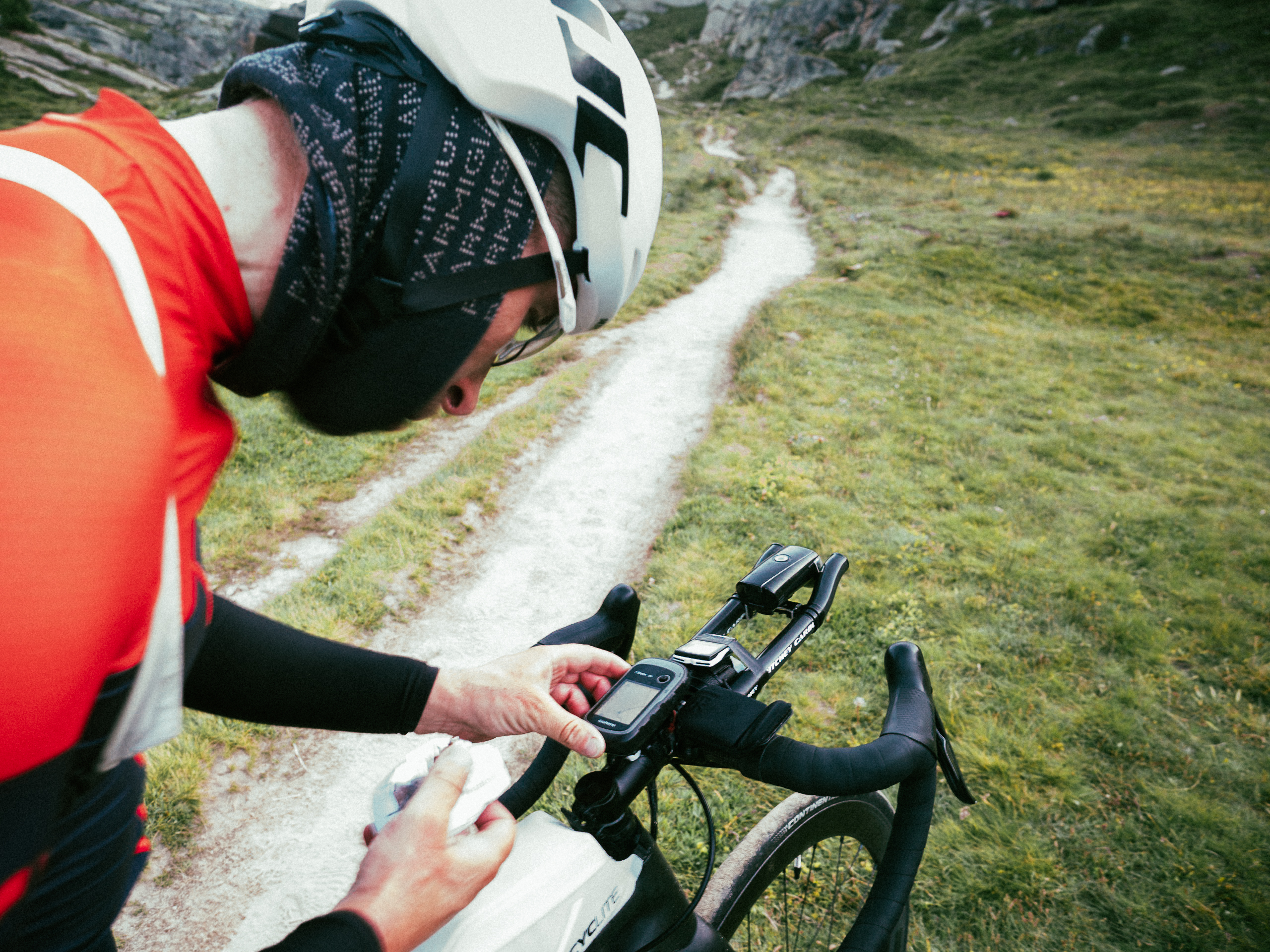
Following him on the trail, we take several shots, then I keep following him to a crossroad. The trail splits and he stops to check the route. I stop abruptly and wait for his choice – picture Wile Coyote’s braking noise whenever he sees Roadrunner. He takes right, I go left; he goes for the military road, while I prefer the single track to get in front of him. At that moment I feel clearly the power of my behavior. Does Adam think I know the best trail since I am a local? Do I instill the doubt through body language? Am I giving him clues of some sort? Many questions bordering paranoia.
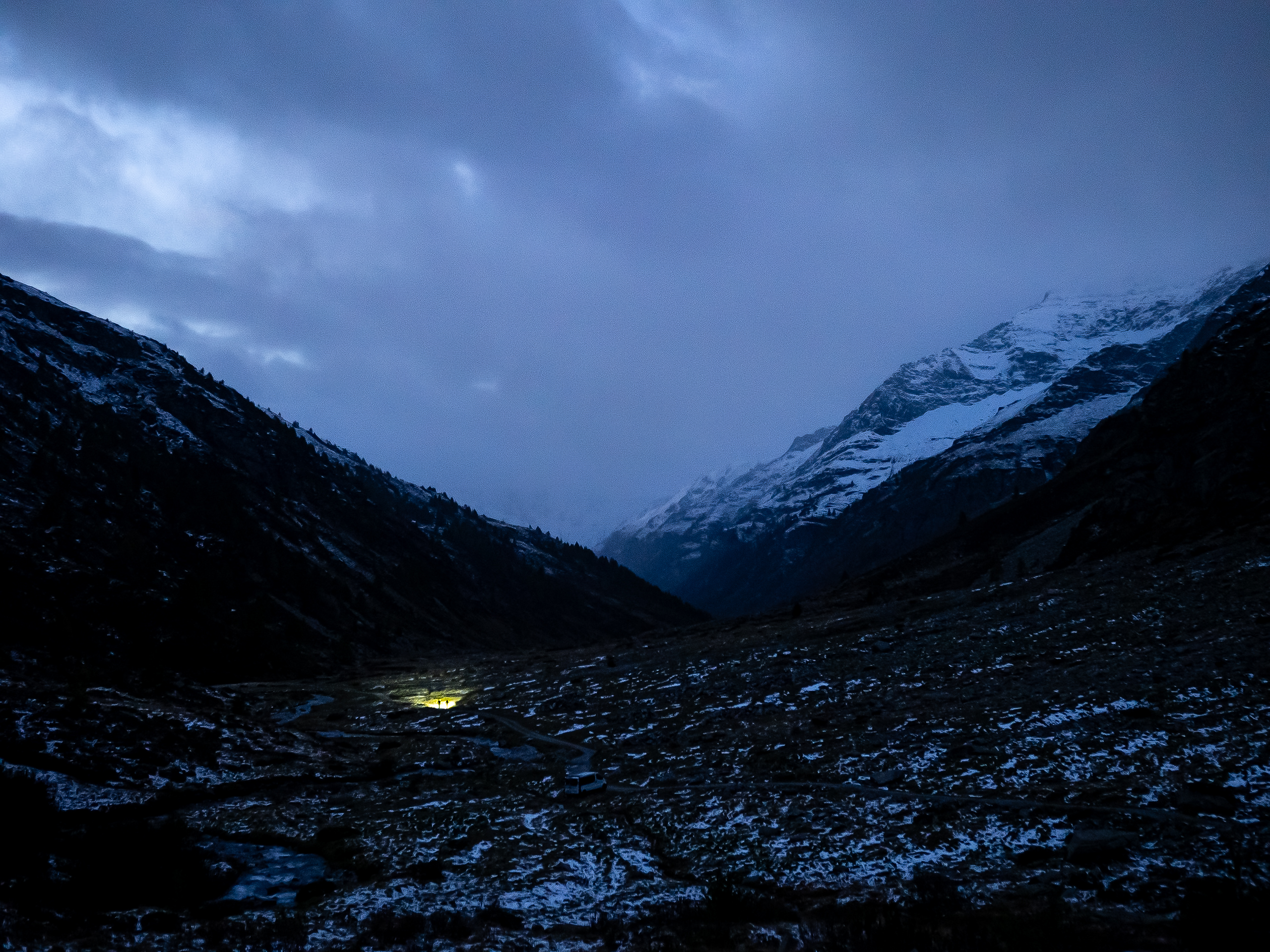
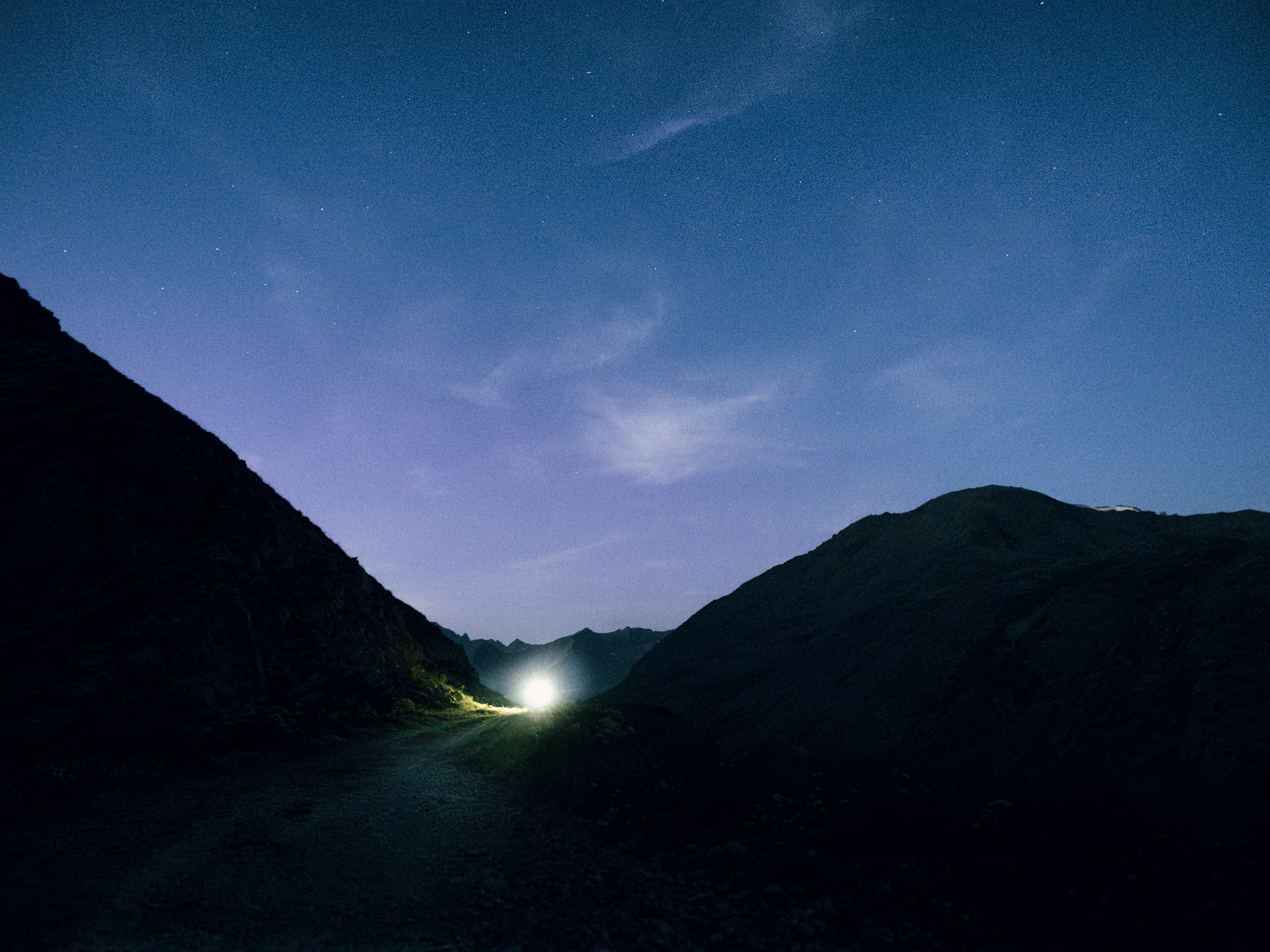
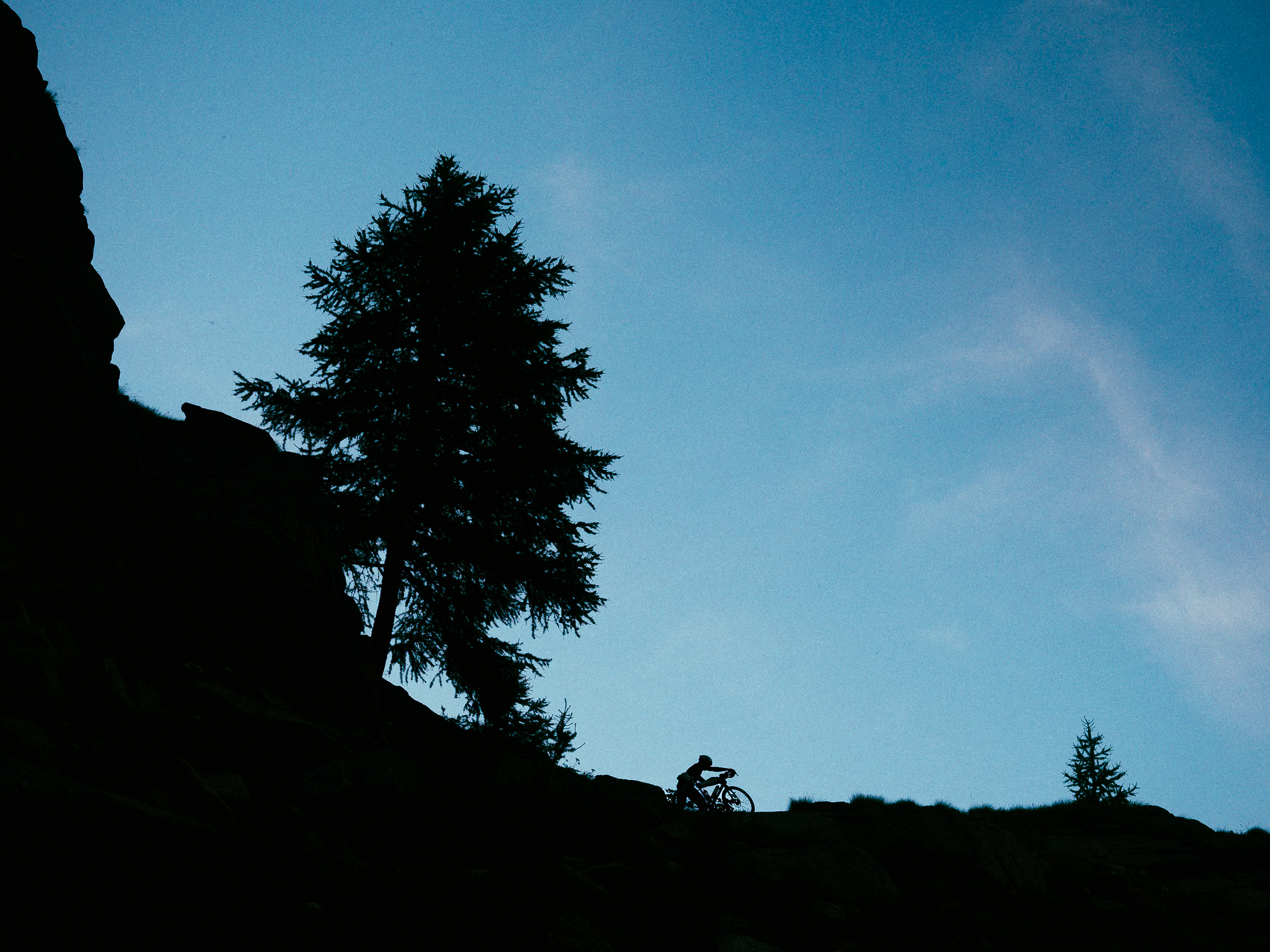
The silver lining to all this is that there is not really a solution. Influence (whether positive or negative, that depends mostly on his attitude) is there from the moment you say hello. You can’t un-influence. So, with Adam I stick to my original idea. I get ahead of him on the single-track to wait for him in the dark, even if this means that he can see mee passing ahead from his elevated road. Some more shots – little man versus vast landscape, the classic romantic scenery, you get it. Then we part way, it’s late already and it’s pitch black down the valley.
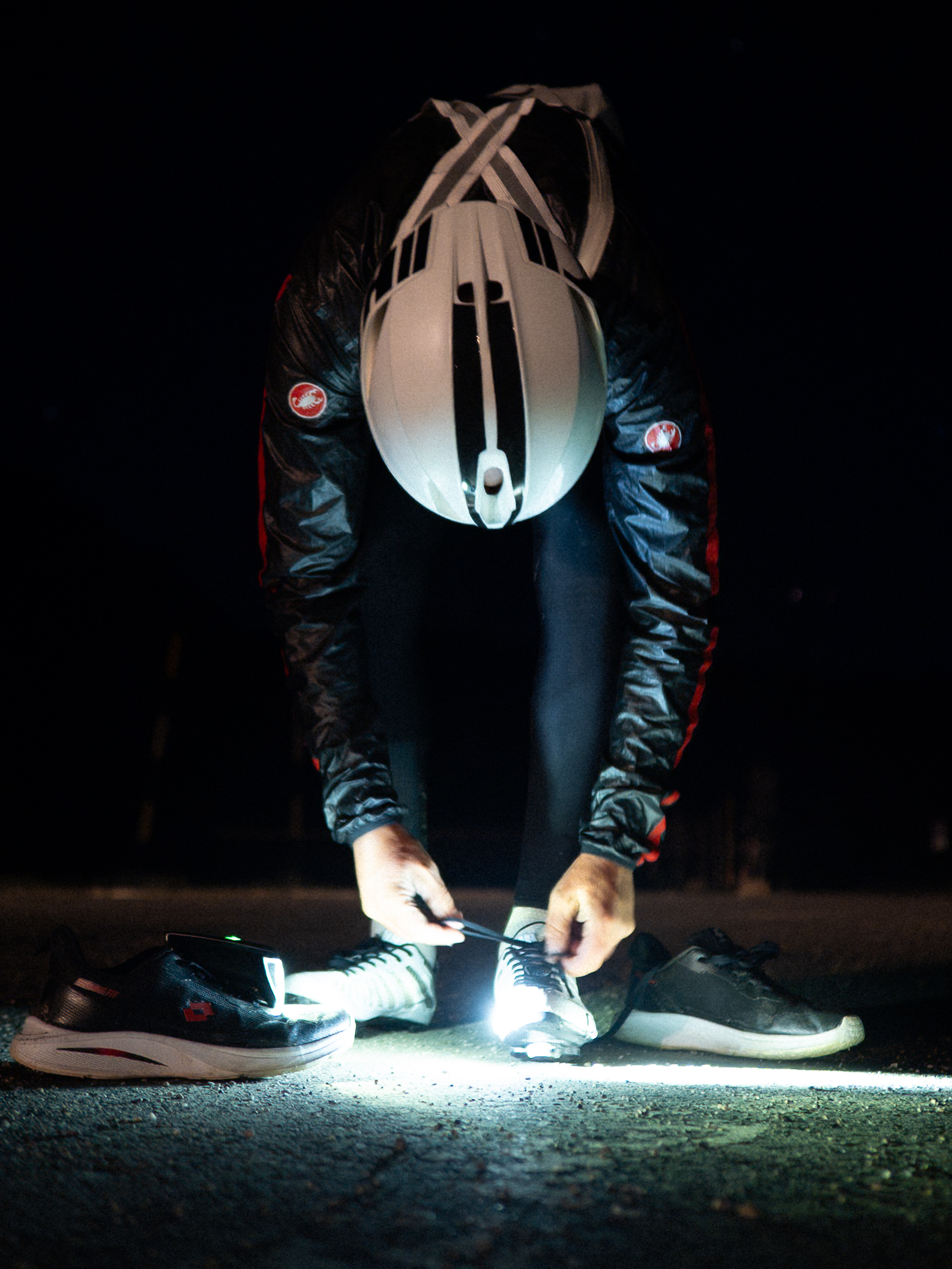
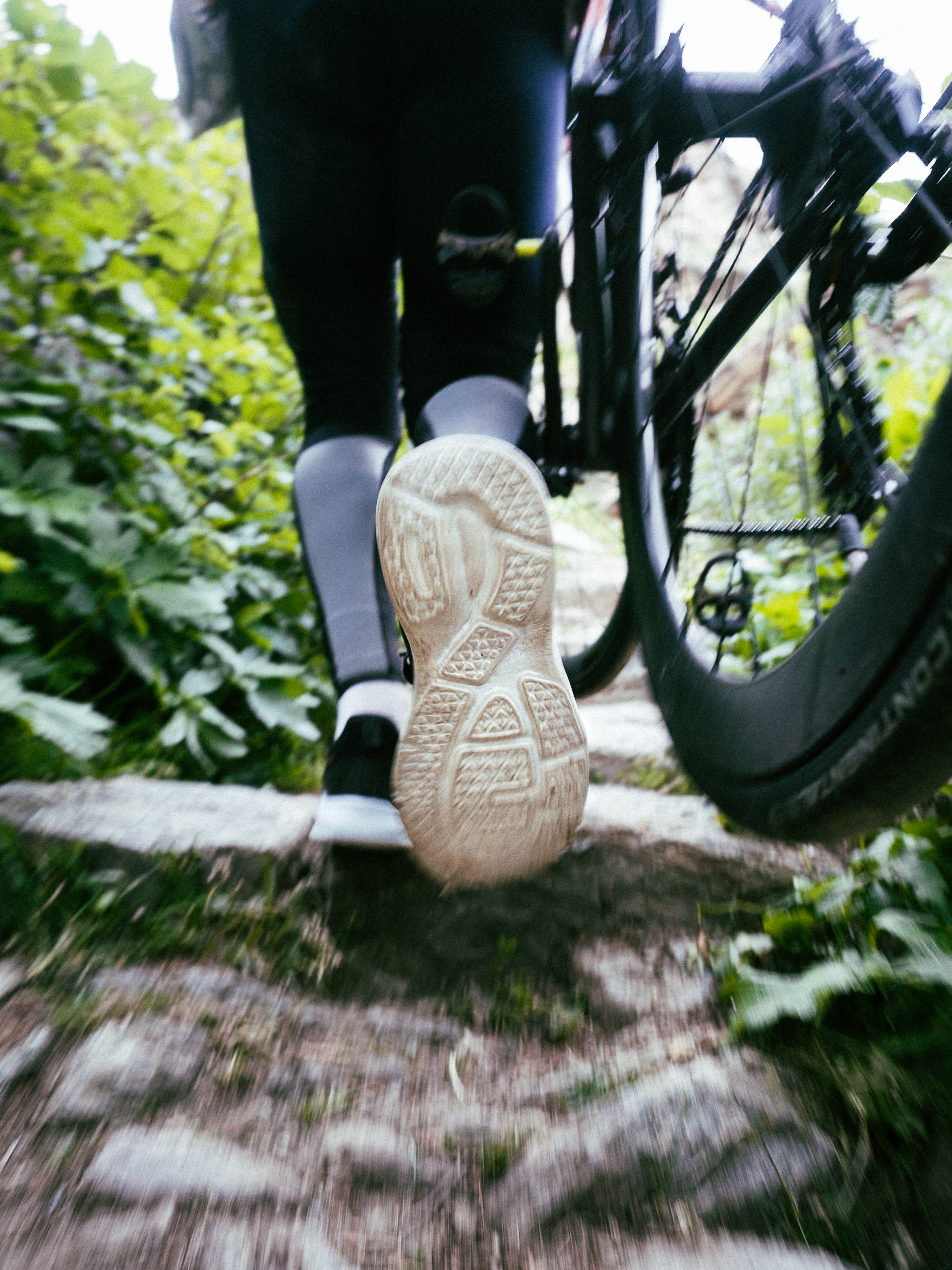
After the race, Adam gives us positive feedback, saying that we didn’t bother him that evening. This is comforting: when I send some pictures to the organization immediately after the shooting, two of them are challenged: “you look like you were too close”, when I tried to catch his running shoes on the hike-a-bike; and “your car lights can be considered helping the rider”, when he is swapping shoes in the parking lot.
I have objections. As for the shoe picture, I took it because wow, the leader is running on rocks during a road race. As for the light, it could have been a random car in the parking lot; as I often stress, photography is about plausibility more than it is about truth. There were other vehicles that drove there, both before and after Adam stopped.
Still, it’s a race, so this caution is perfectly reasonable. The principle of “unsupported race” must be applied in the most severe terms, also to avoid polemics.
Eivind and the flexibility of rules
Another set of questions arises since the race is not always a race. A few more days into VIA, we are planning our day in order to catch Eivind Nordal Gran at sunset on the mandatory gravel section of Strade Bianche. Tuscany landscape, good light, and a cool rider; couldn’t ask for more for the last shooting of the day, just before pizza.
At 8 pm we are in Asciano, at the southern end of the mandatory parcours, and his dot is just entering the section from the north. We already know some spots, and in a few minutes we are all set on a turn. The usual wait starts. Nothing happens. Our eyes go back and forth from the road to the tracker. The dot isn’t moving anymore. Previous updates were reliable, so something is off.
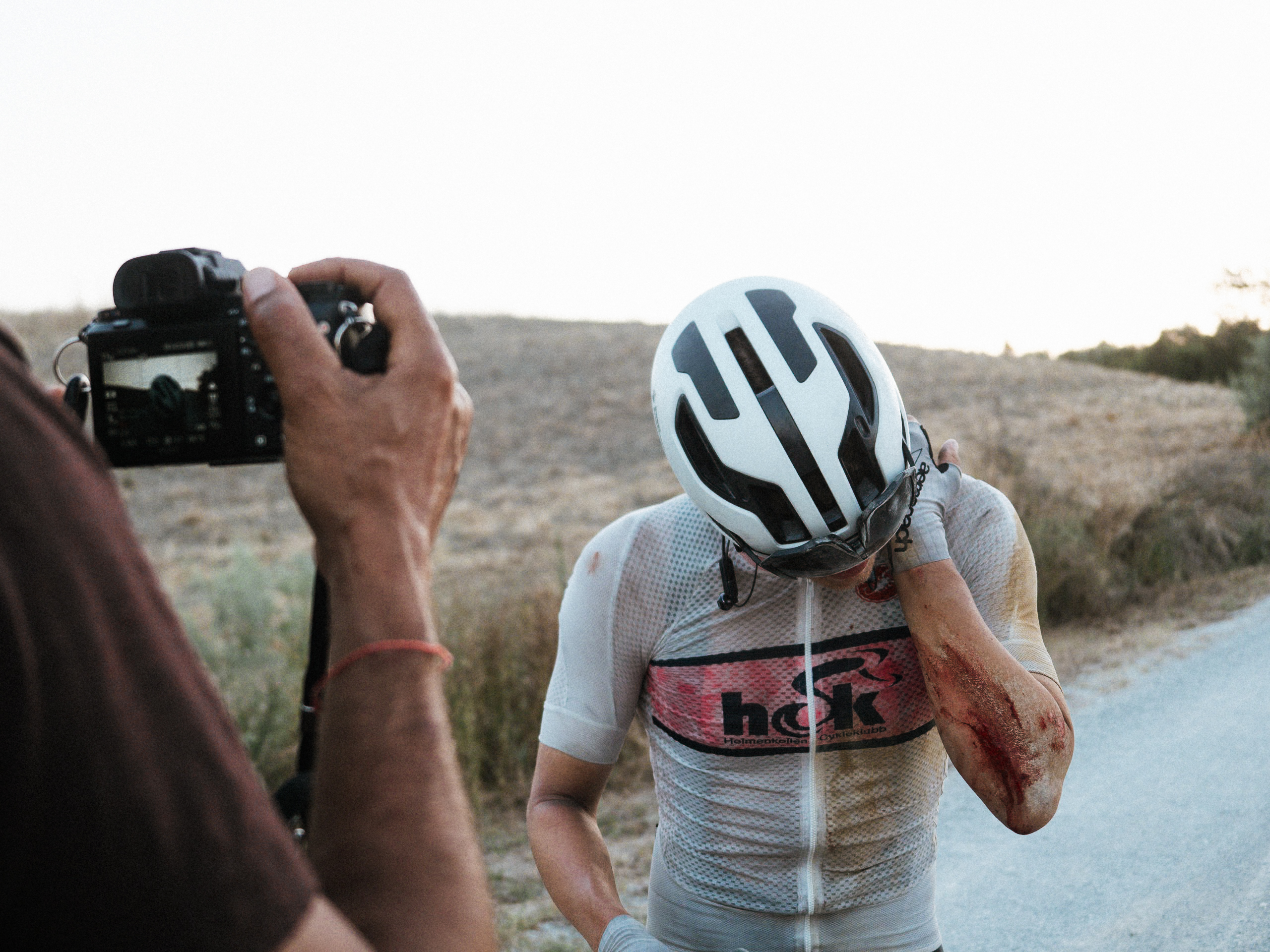
Should we risk our nice spot to approach him in time for golden hour, or wait for him in the good spot even if this means shooting in a bluer light? Time is running, but he isn’t. Dot’s last location is in a downhill section. Who stops there? Did he have a flat? He’d already be riding again. Did he fall? We must decide quickly, our gut says to get closer. Some 100 m further, just behind the top, we find him recovering from a fall. He is very happy to see us.
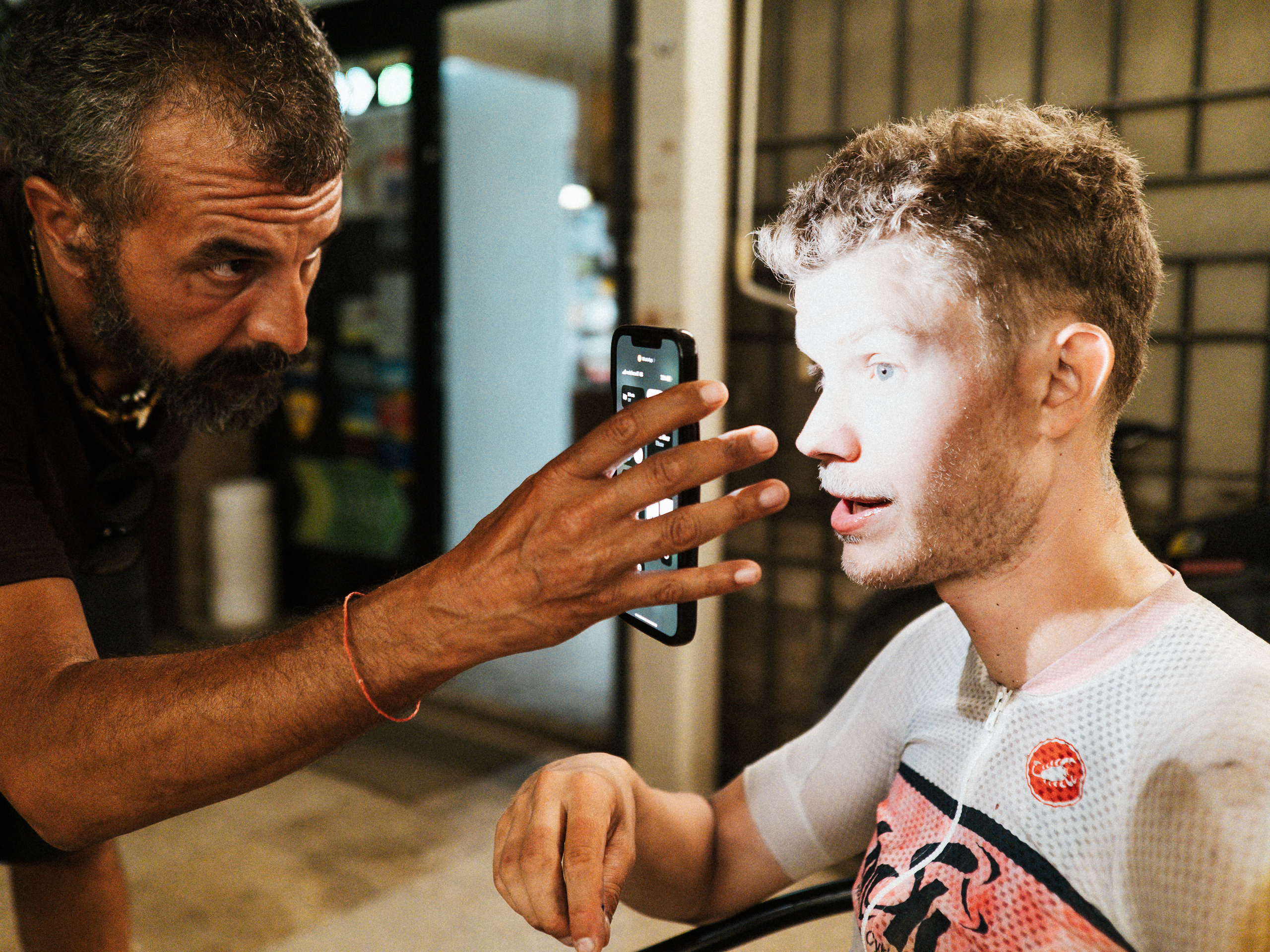
We shoot and we approach. But we also become an assistance car. Eivind himself asks us to check on him a little longer, and neither Ryan nor I think for one second about the ethical issues. We assist and shoot. A bit later, he asks us to escort him to the village, where he will stop for the night. The words “against the rules” are said at some moment, but I can’t remember who mentioned that. The reply is simply “we’ll see afterwards”. Maybe it’s just my thoughts. If he needs us to feel safer, we stay.
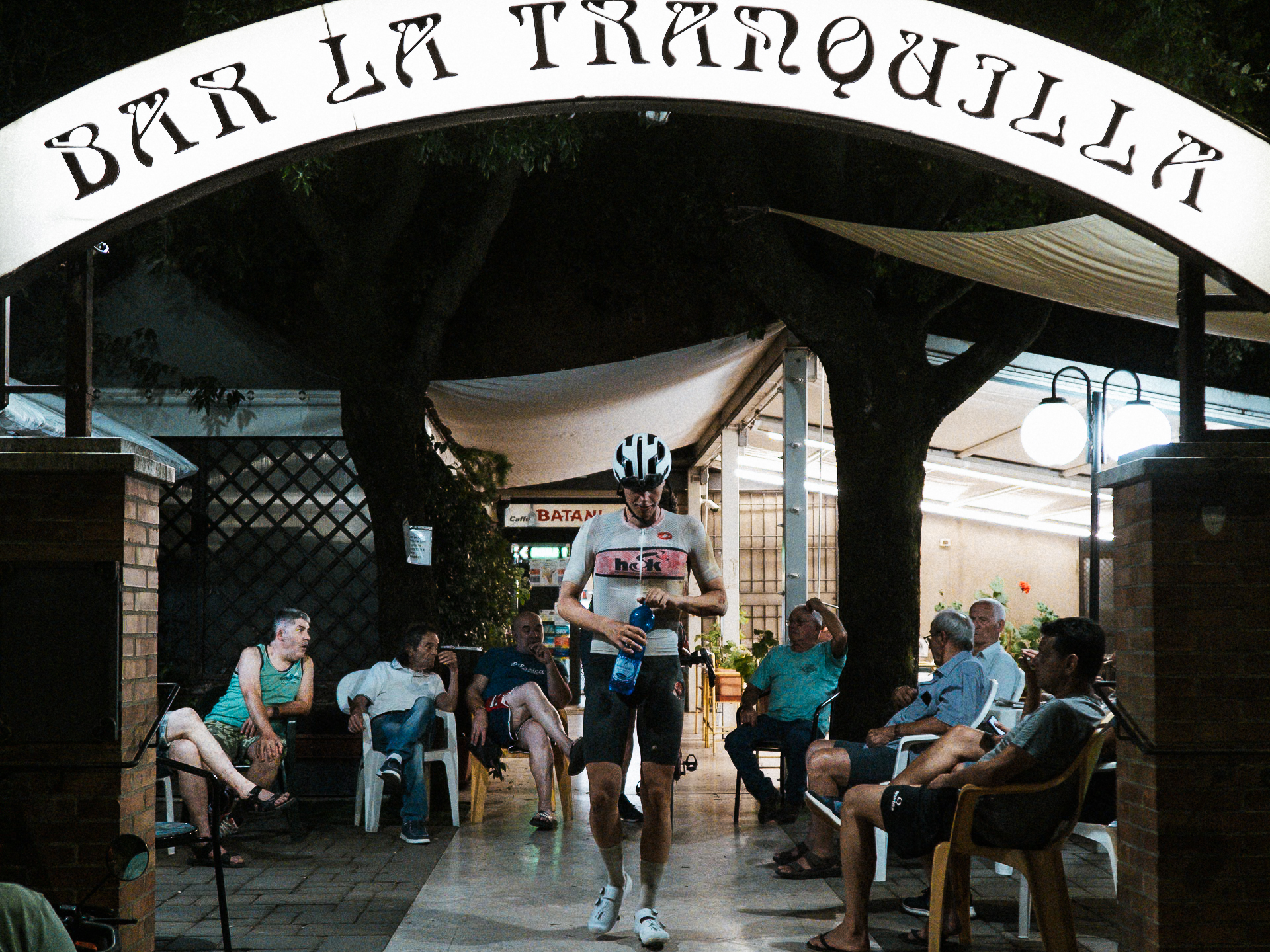
We reach the local bar, where a platoon of retirees enjoys the fresh evening. All look to this strange individual, blood on his leg and arms, with his pink gravel bike. A friend of his happens to be nearby on holiday, so we wait until he comes to pick him up.
We clearly supported Eivind. Is that double standard? If we just left him to this own destiny, he wouldn’t probably feel betrayed or neglected. But he was enjoying his holiday; to keep him doing that, helping was the right thing. His ride was about adventure, while Adam’s was about winning. In Italian there’s a saying about this. Due pesi, due misure which translates to the fact that the same fact in different situations requires different behavior.
Indeed, after Adam’s finish we find that he fell twice on the Nivolet hike-a-bike, shortly before our encounter. Of course, if he had asked for help, we would have provided all we could. But Adam was racing, and he didn’t mention the accident until the finish.
Despite all theories, it’s easier than expected. Understand the will of the riders, and you’ll probably have the answer about the support/interference matter. If they are racing – regardless of their place – you’ll know it. Actually, usually you already know it beforehand. If they’re cruising, you’ll have more room. Adam looked for pizza because you find it everywhere and it’s fast, while Eivind looked for pizza – even four per day – because it’s tasty. Why should the rules be the same?
The following morning, Eivind communicates his scratch. He could keep pushing, he says, but it would’t be fun to ride with bandages into the heat. He will recover in Florence and join us at the finish party in Giovinazzo. Weeks later, I ask him if he scratched also because he had violated the rules about support. “I didn’t think about that, I didn’t care about the race” – said Eivind.