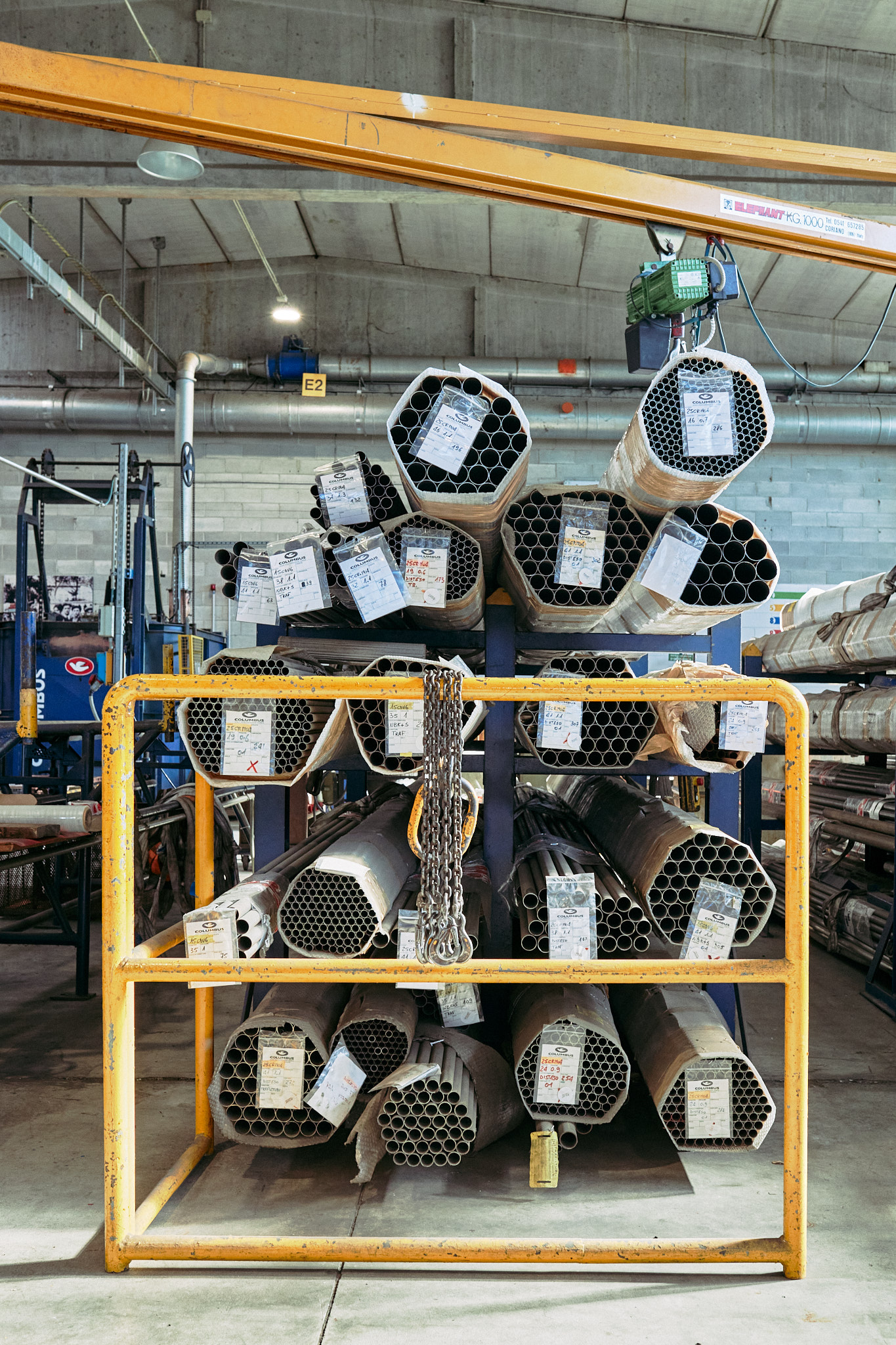
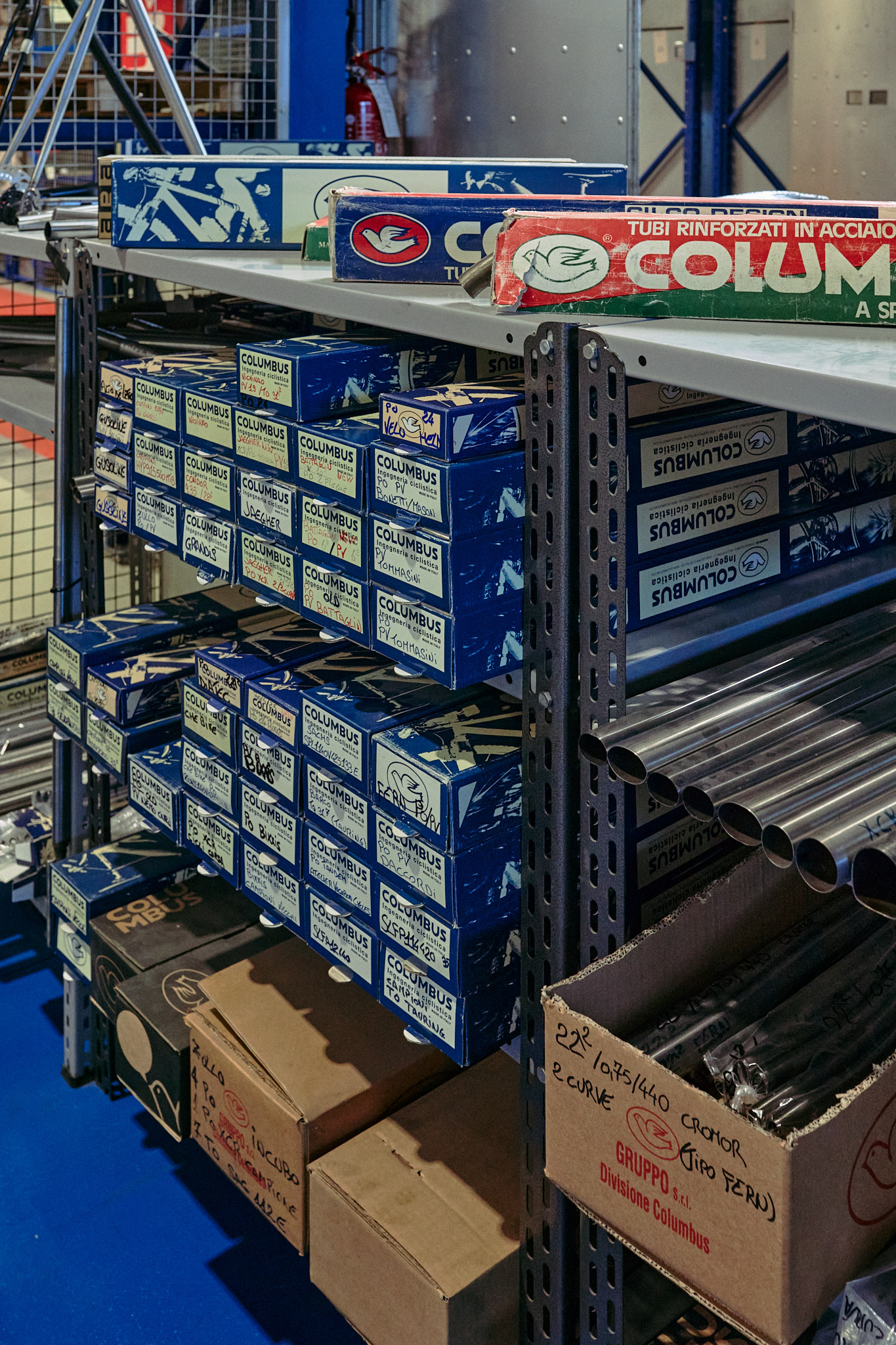
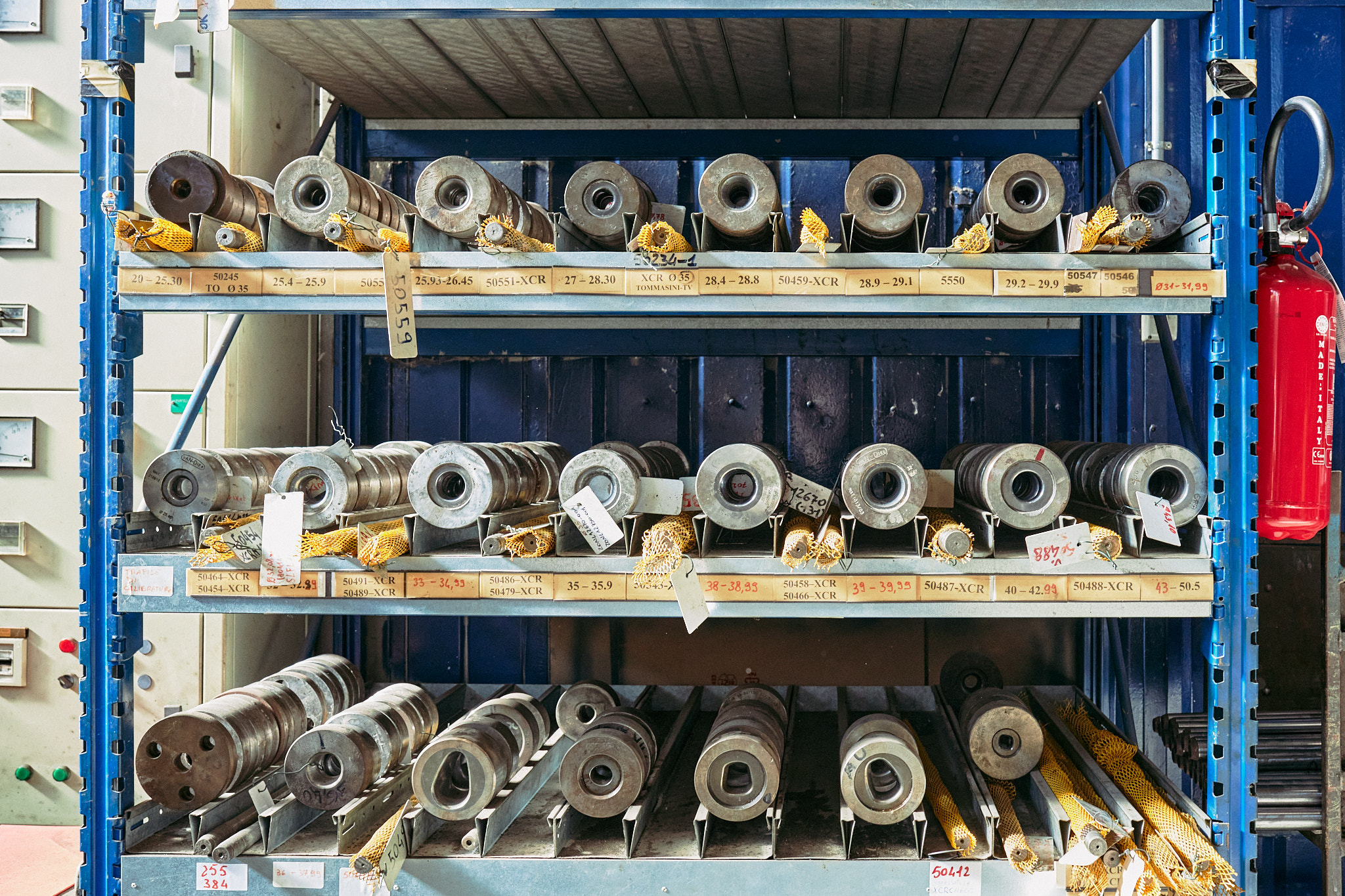
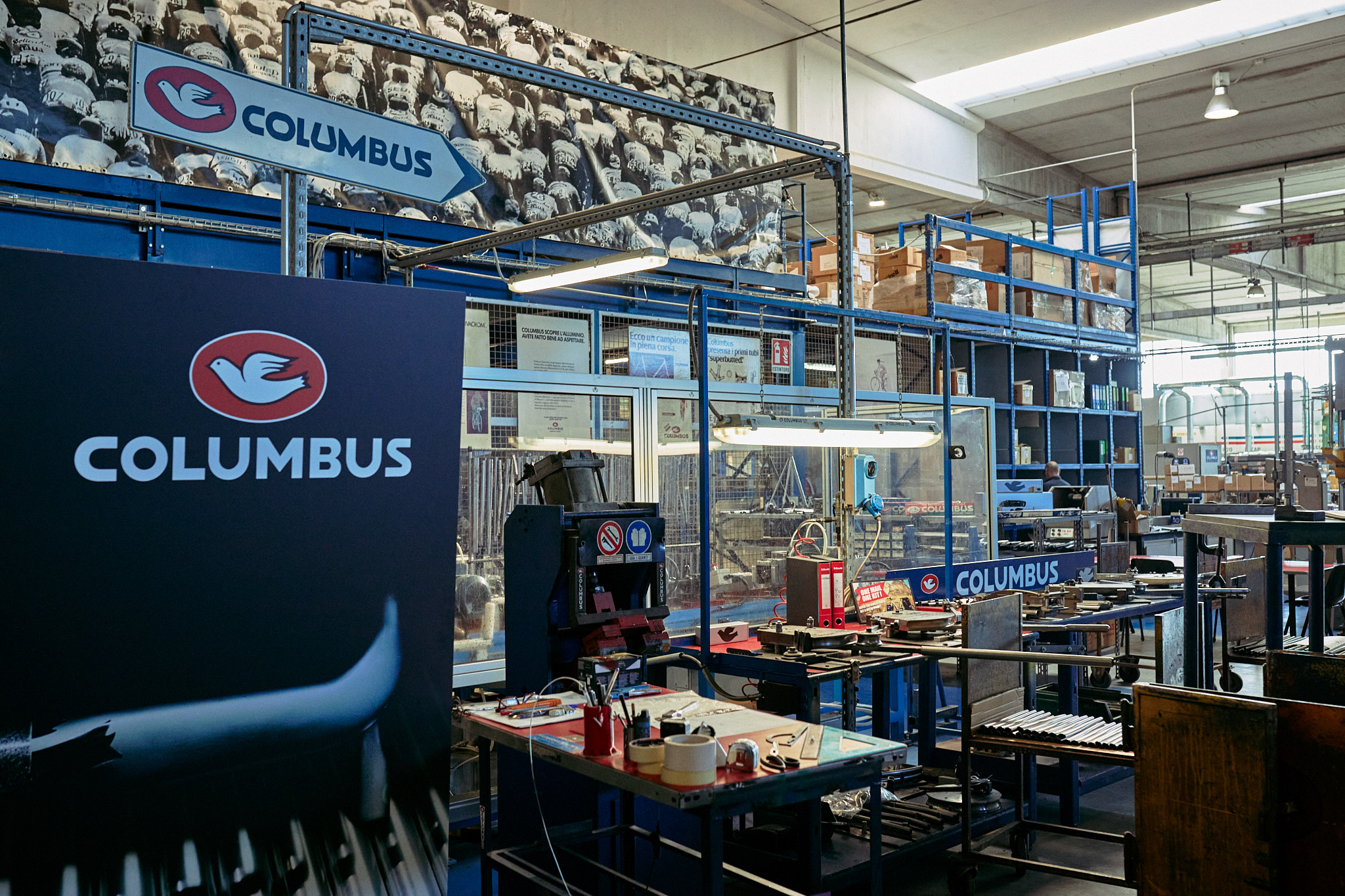
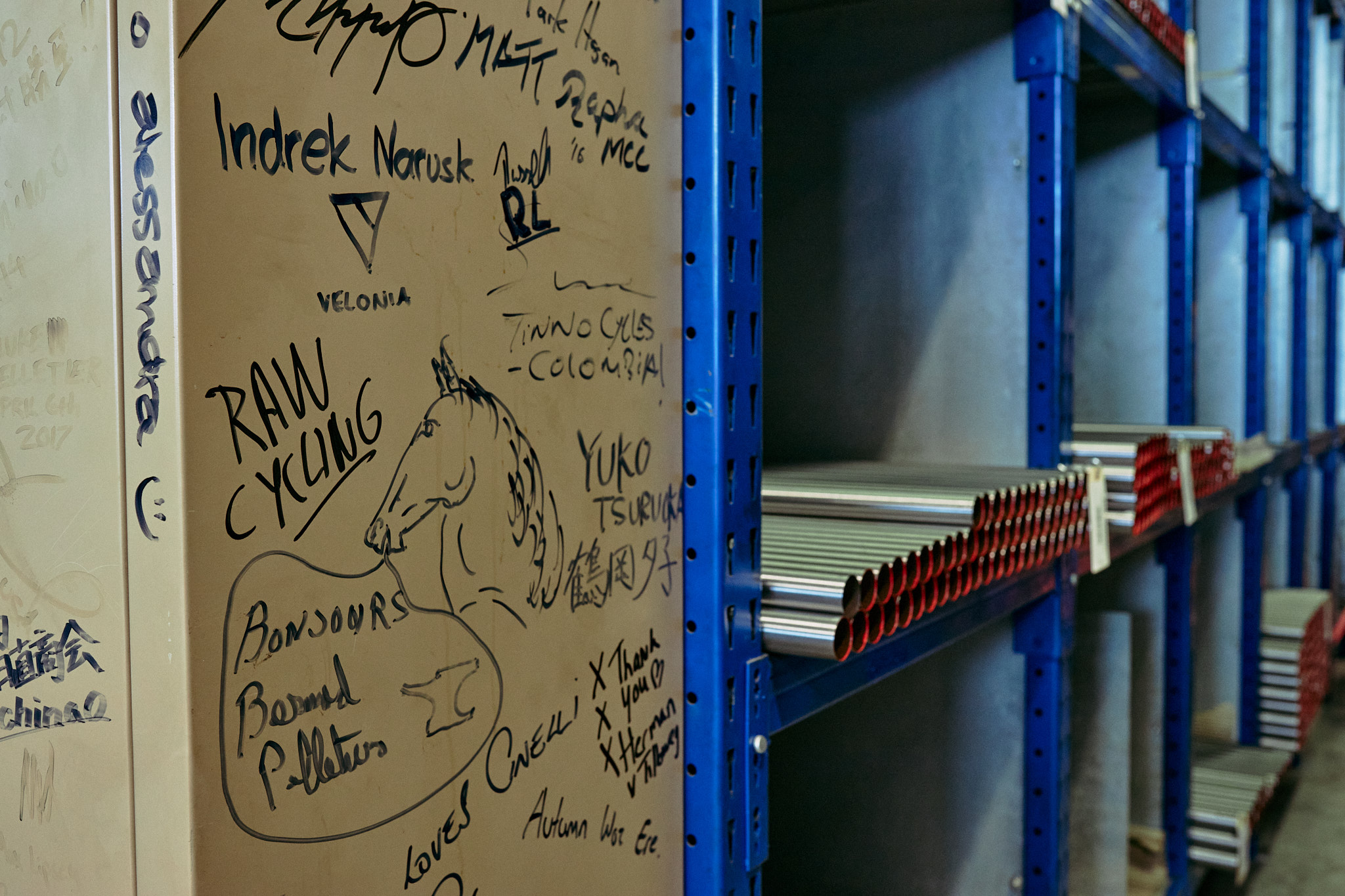
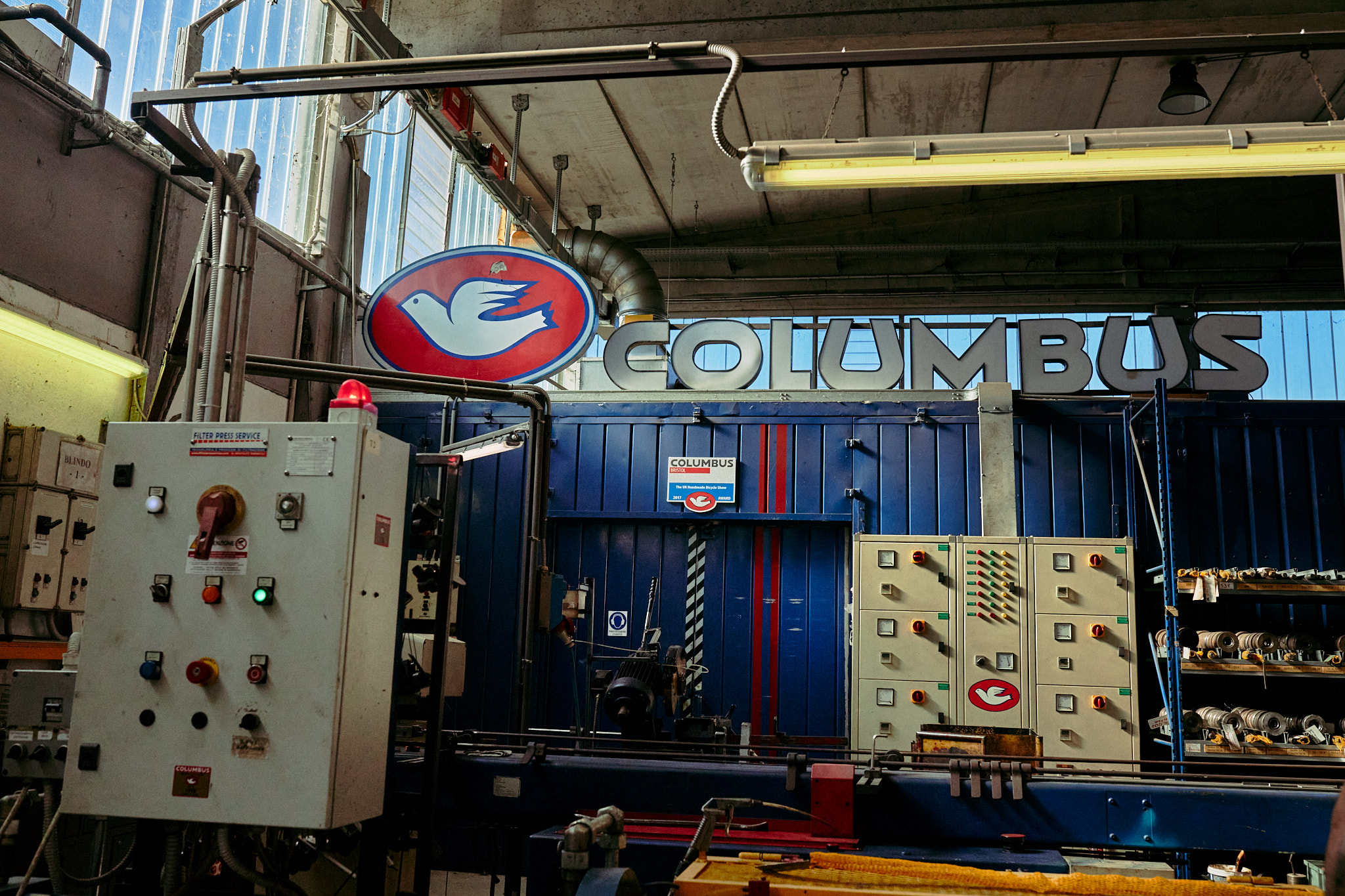
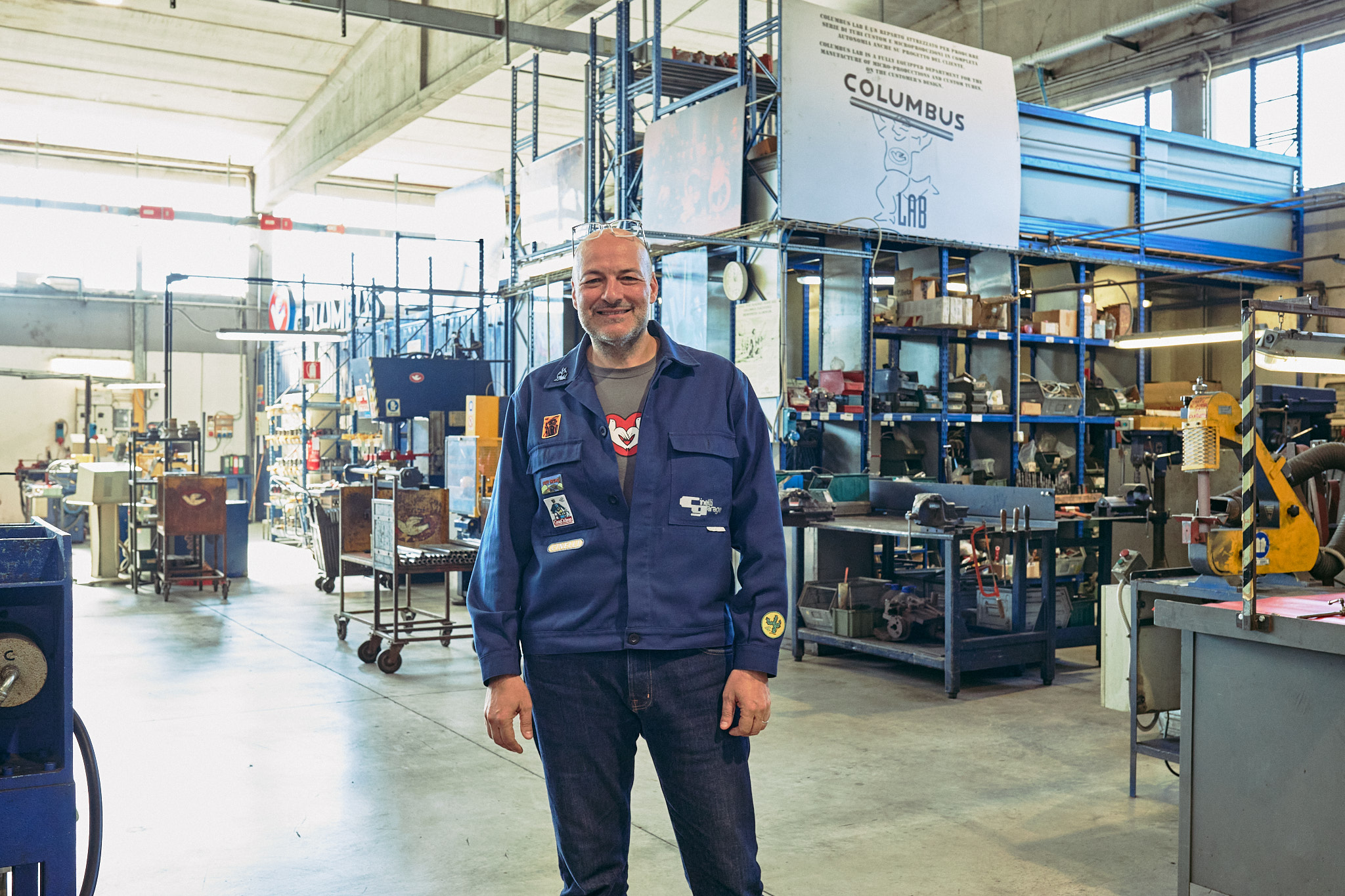
If you have ever engaged in a conversation about steel bikes, “Columbus” was probably mentioned in every other sentence. Its logo is rarely visible in the final build, but the tubing of the Italian brand is the bike’s spine. During our visit to Cinelli for launch of the Aeroscoop, we had the chance to cross the door that led us into the Columbus world, where we enjoyed ourselves like kids, walking past the shelves full of tubes.
To understand Columbus is to understand how bicycles have been imagined and built in Italy for over a century. Our time at their base near Milano allowed us to sense Columbus’s own personality, the crafty process behind each tube, and the values they excel in preaching.
Steel, before it was a statement
Columbus was born in Milan in 1919, long before steel frames became nostalgic objects or political statements against industrial carbon. Back then, steel was not a choice, but the only way forward. What mattered was how it was shaped, drawn, and refined.
From the beginning, Columbus focused on tubing rather than complete bicycles. This distinction is crucial. While other brands became famous for their frames, Columbus dedicated itself to perfecting the raw element that framebuilders depended on.
Visiting the Columbus headquarters makes this clear immediately. This is not a museum frozen in time, nor a hyper-sterile R&D lab cut off from reality. It is a working space where past and present overlap naturally. Vintage tubing samples coexist with carbon layup schedules, and experimentation feels continuous rather than disruptive.
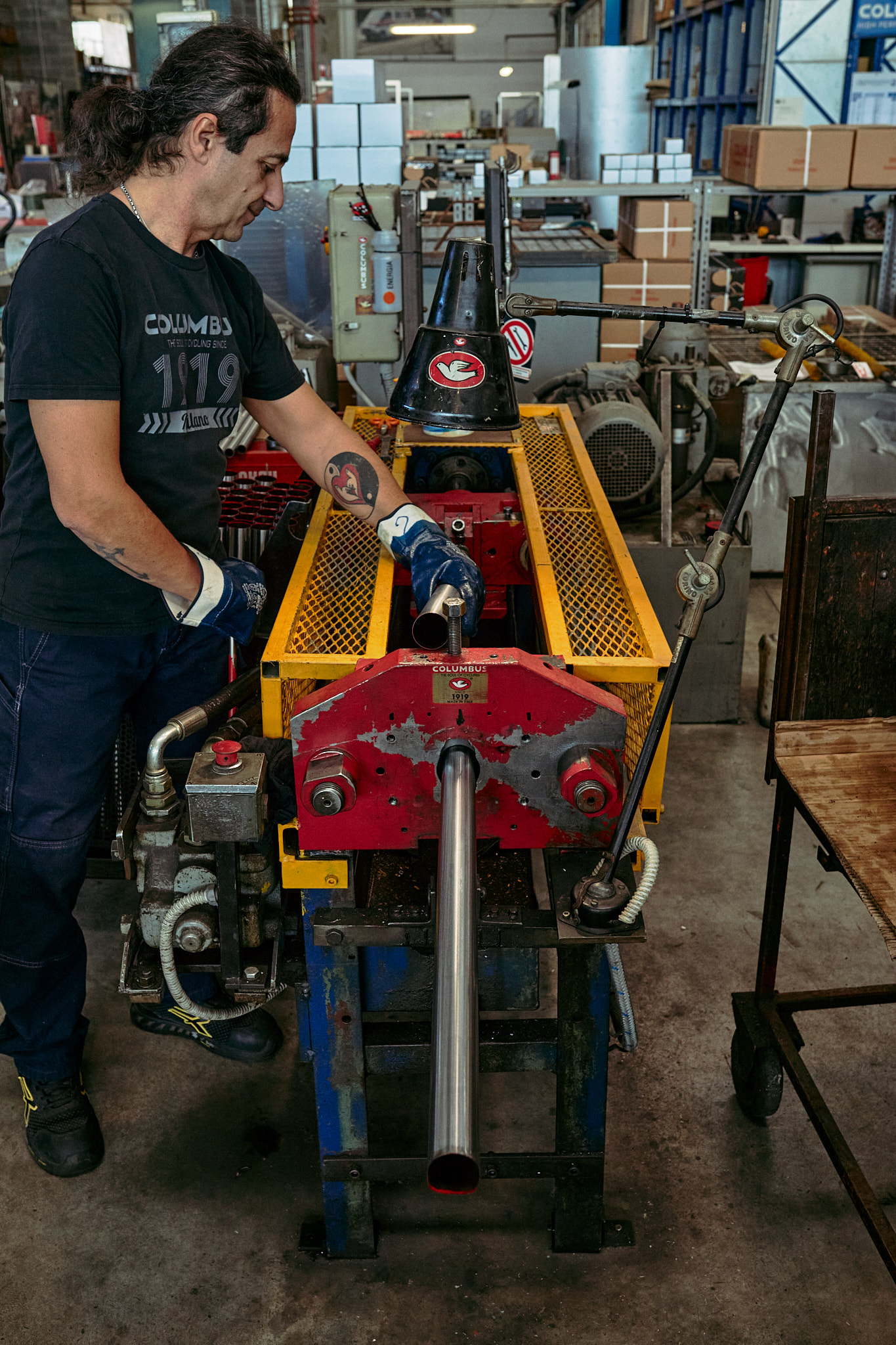
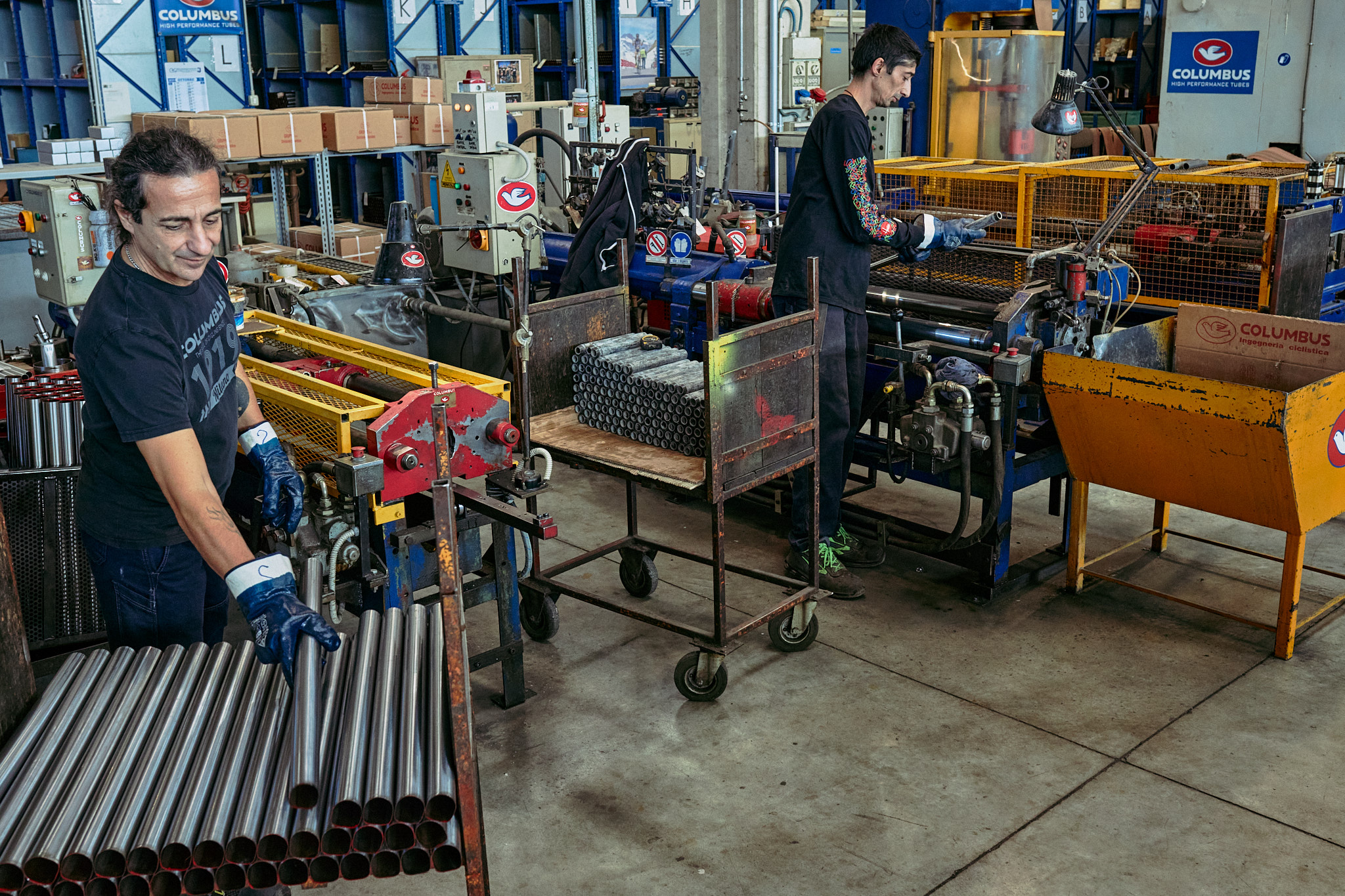
We could check firsthand how, starting from the raw material, they shaped the tube and subjected it to a three-step heating and cooling process to reduce stress and improve its mechanical properties.
At the forefront, in an alternative way
It would be unfair to frame Columbus as a “steel-only” brand clinging to the past. They adopted other materials, but ensured they aligned with their values. For example, carbon for Columbus was never about maximum stiffness numbers or marketing superlatives. It was about controllability, durability, and feel.
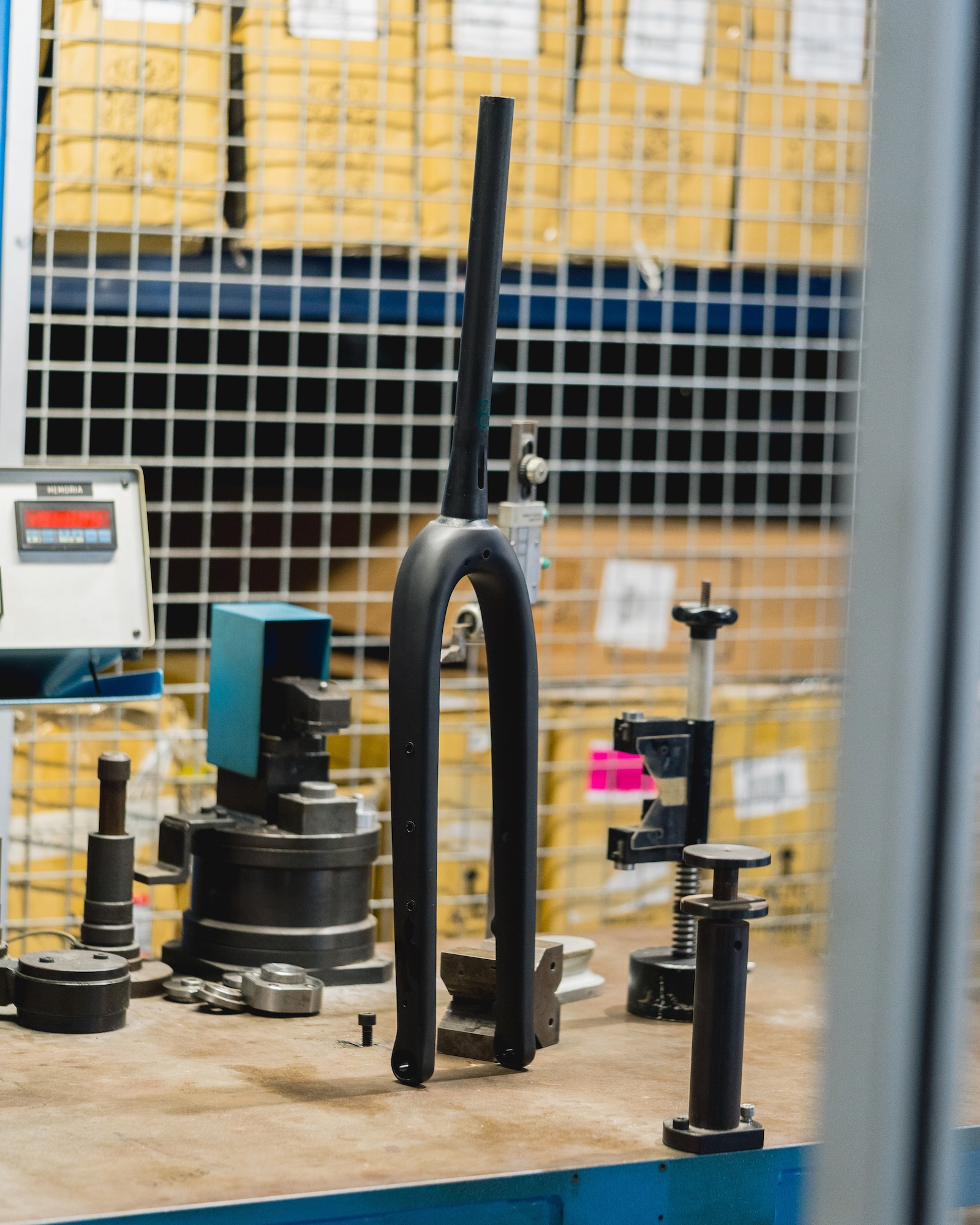
Carbon forks and cockpit components, and later titanium tubes, emerged to extend, rather than replace, the craftsmanship they were already well-known for. Framebuilders who had spent decades brazing steel could now design carbon frames without surrendering authorship to anonymous factories.
Recent range expansion
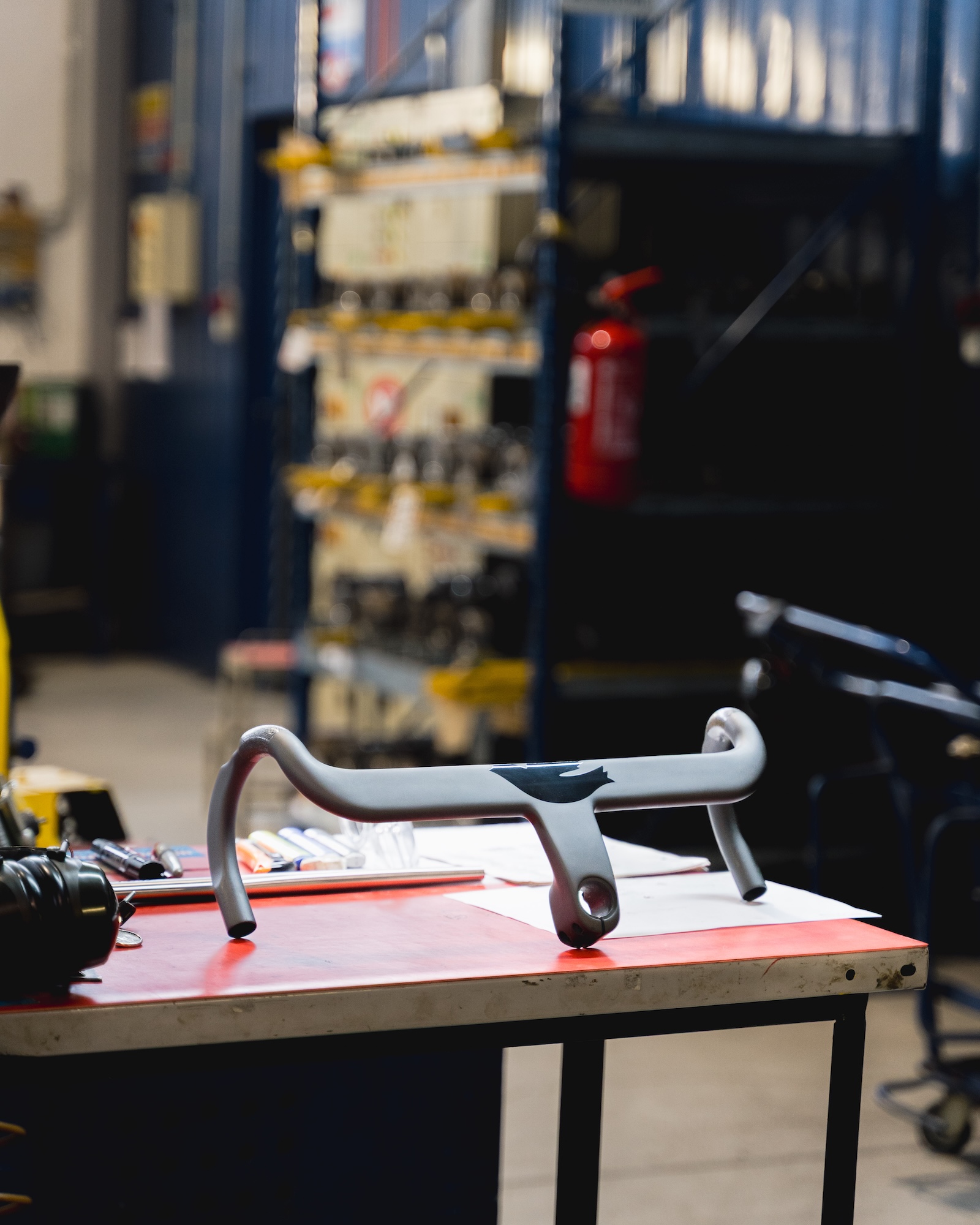
They have recently complemented their components portfolio with three new carbon forks and three integrated handlebars, the first time they offer this type of cockpit. The Spirit Racing integrated bar and stem is intended for use in fast pavement, while the Cento integrated bar is designed for gravel adventures. The Futura range features one cockpit and two forks: Futura Fast Gravel and Futura Divide. Lastly, the new Trefoil Allroad fork sits in the intersection between road and gravel, with eyelets for light luggage.
The builder’s brand
Perhaps the most remarkable thing about Columbus is that it remains, at its core, a builder’s brand. In an era dominated by monocoque frames and proprietary everything, Columbus continues to serve those who still want to make bicycles, not just assemble them. Framebuilders consider Columbus as a partner rather than a supplier. They push the brand with unusual demands, unconventional geometries, and niche use cases, knowing Columbus can deliver.
The shared language of craft
Founded by Cino Cinelli, former professional rider and visionary designer, Cinelli understood early that performance and culture are not opposites. His frames demanded the best materials available, and Columbus tubing became a natural partner. Both brands believed that innovation should refine tradition rather than abandon it.
Eventually, this shared language became formalized under the same roof. Today, Columbus is part of the Cinelli group, a rare example in which rather than diluted, the heritage was protected by this consolidation.
Made in Italy, still
“Made in Italy” is a phrase that has lost meaning through overuse. At Columbus, it still carries weight. Much of the tubing production, testing, and development remains rooted in Italy, not as a nostalgic badge but as a practical choice. The proximity between engineers, builders, designers, and riders matters.
In a cycling world obsessed with planned obsolescence, Columbus represents continuity, and the idea that progress does not require erasing what came before.