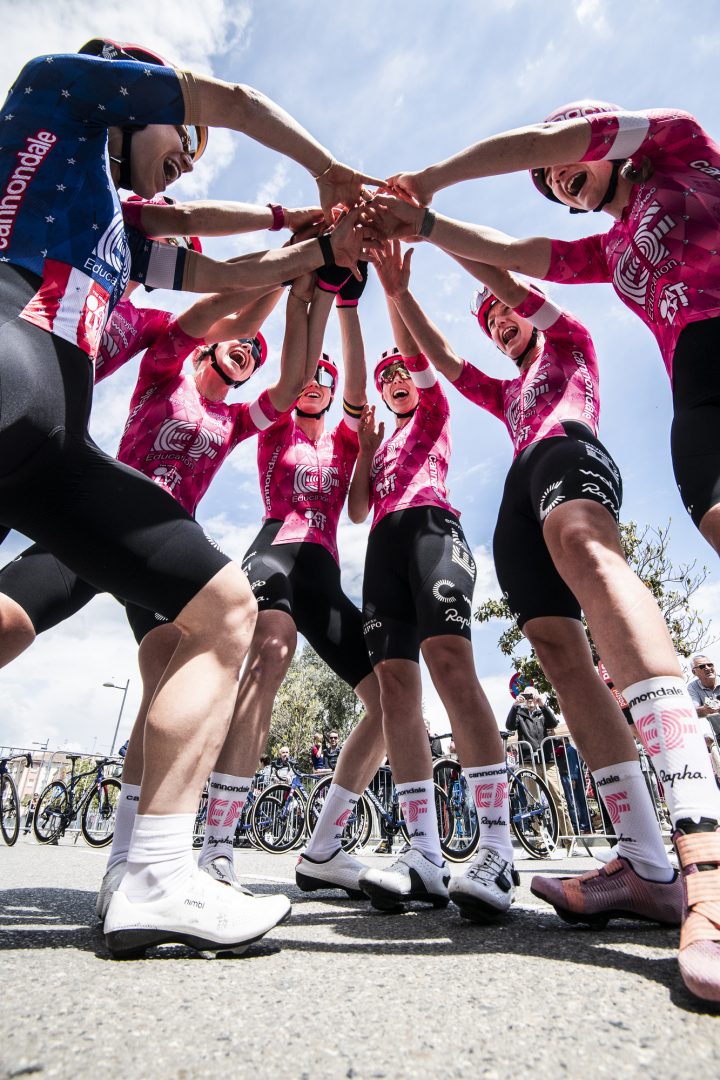
Naike is a biologist by profession, but I suppose that when you are asked to define yourself, the first thing that comes from the heart is what you truly are; and Naike, above all, is passionate about photography.
After several years as the official photographer for La Vuelta, both the men’s and women’s editions, as well as other events on the calendar such as Itzulia and the San Sebastián Classic, we spoke with her shortly after she returned from her first job, which she is reluctant to leave.
It was at university that she took her first steps into nature photography, which soon led to a clear focus on sports “because two wheels had always been present at home”. Motherhood took her away from the sporting practice, and it has now been through the viewfinder that she has reconnected with it.
Landscape as a fundamental element
Defining a creative’s style is complicated, but we can’t help wondering what it is that a photographer always seeks to capture.
“I feel that I am very classic. I see what’s coming now, which is very modern photography, where many things are out of focus and it doesn’t matter, and maybe even in this I’m very scientific, very technical. You can get used to it, learn it, but it’s not innate to me”. – Naike Ereñozaga
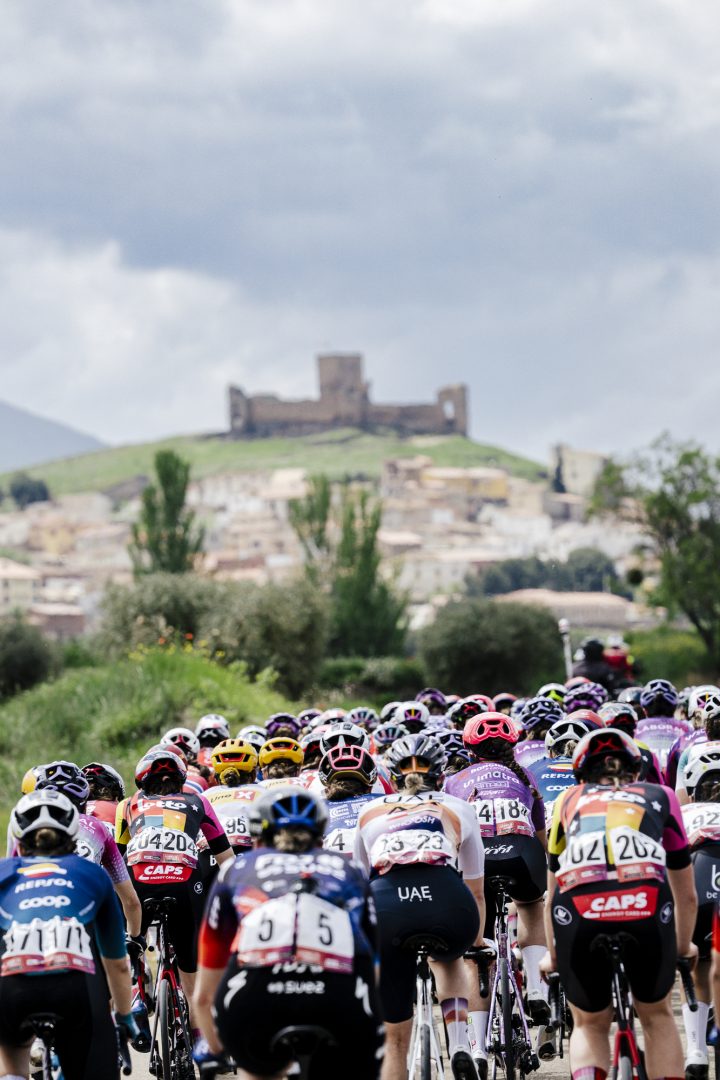
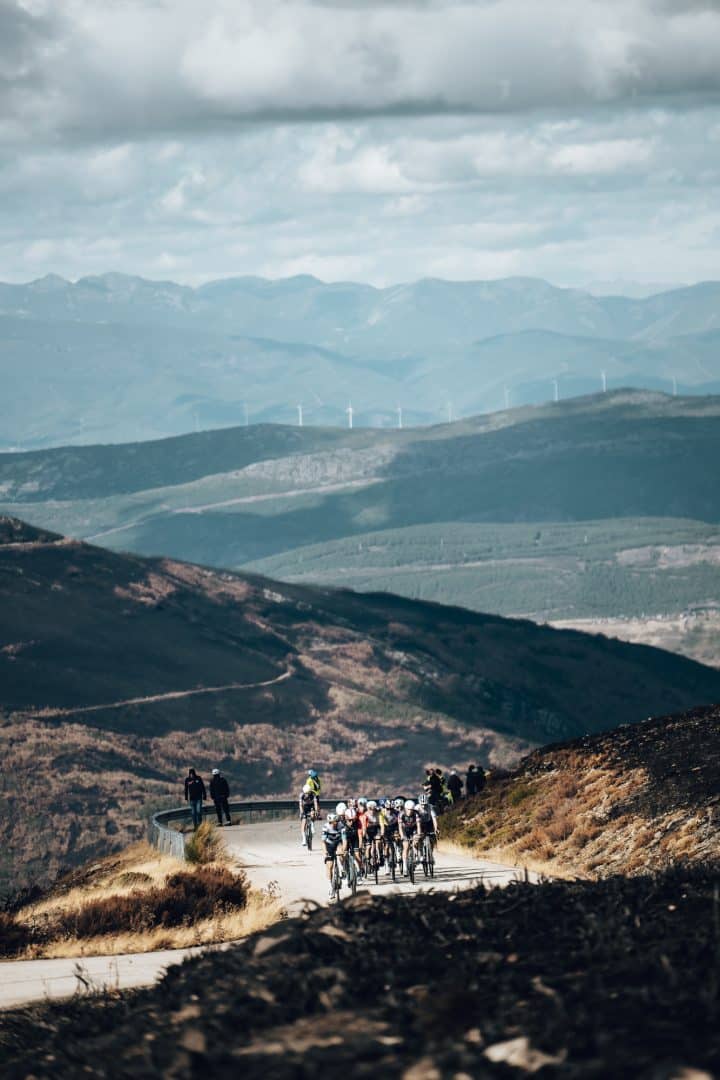
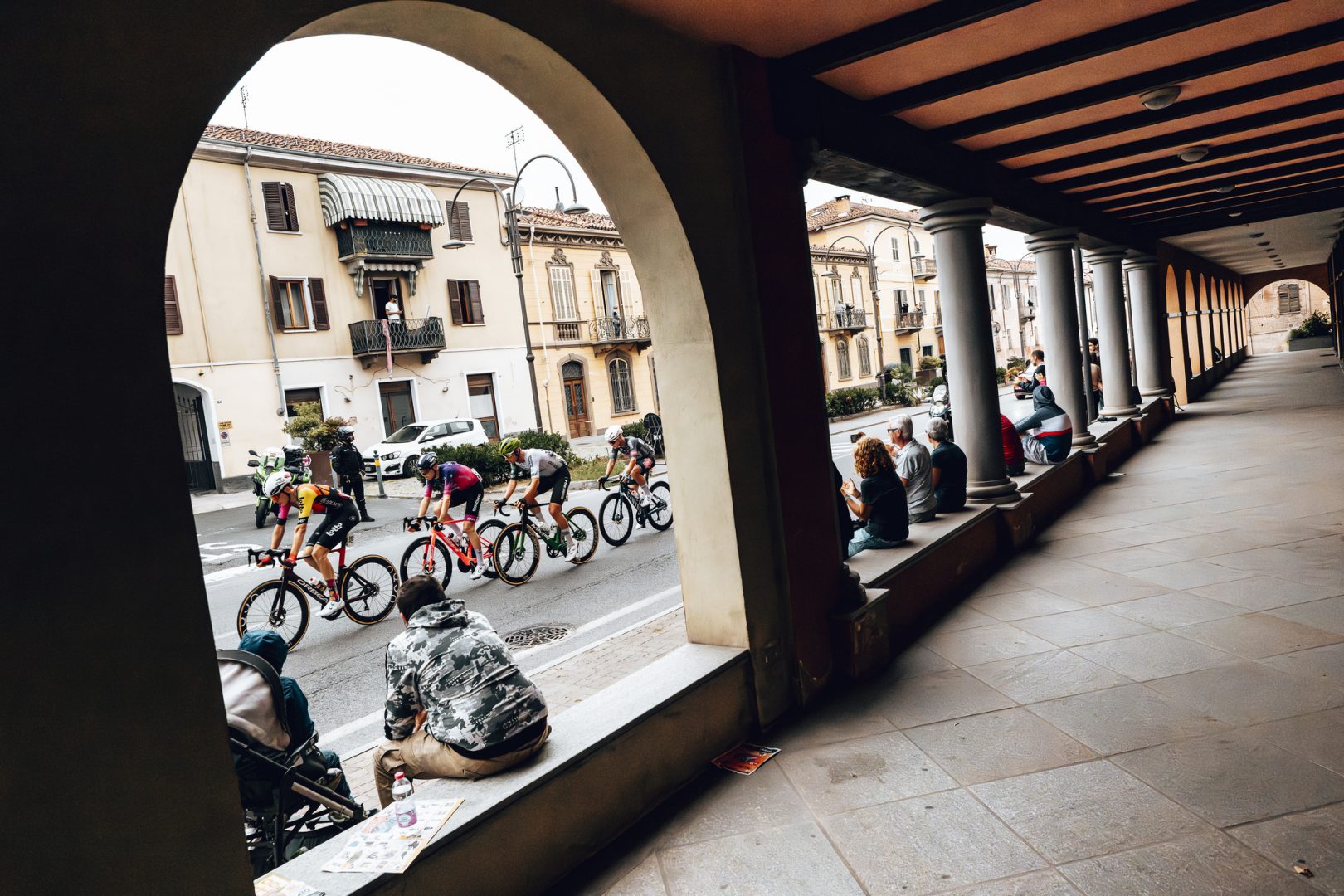
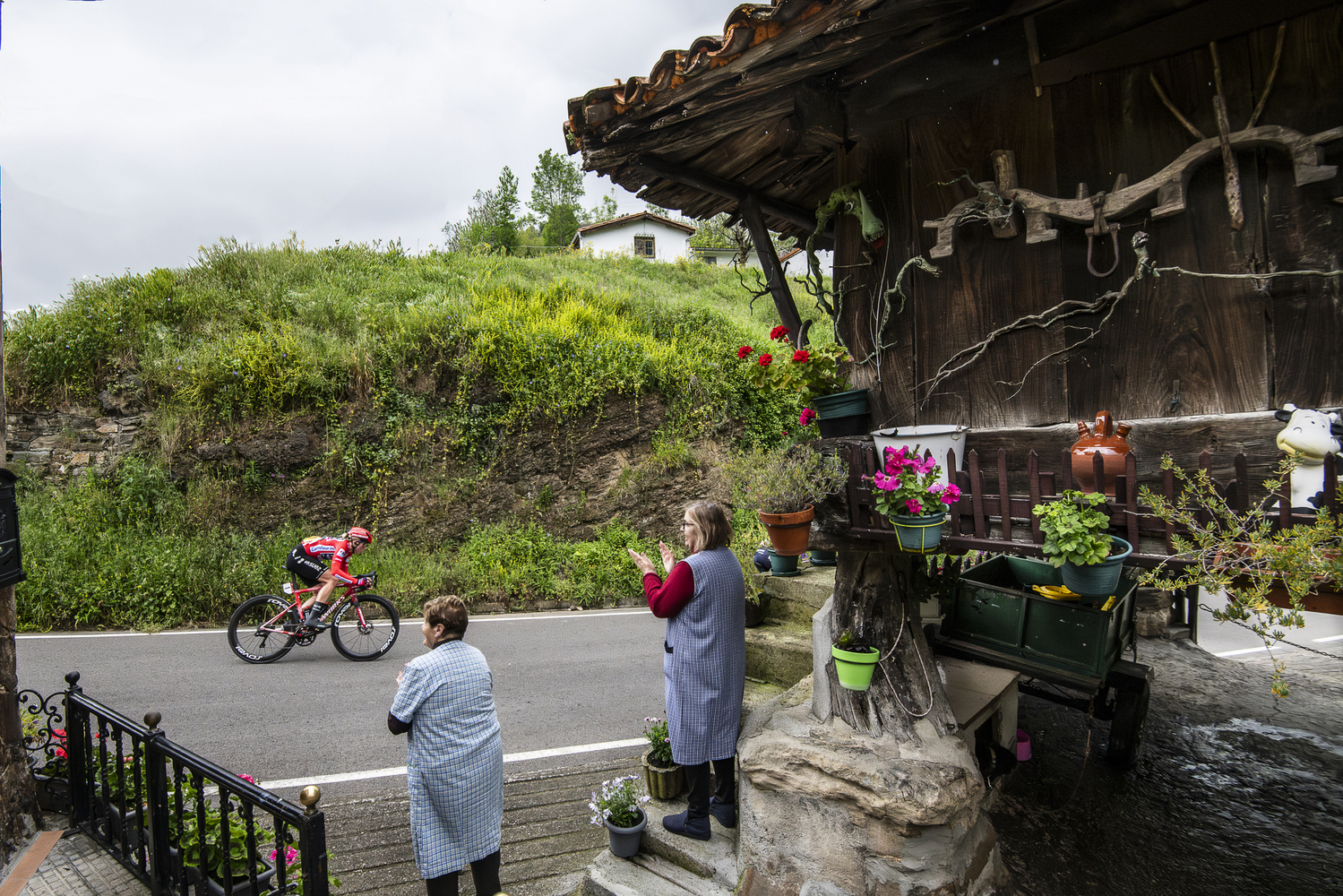
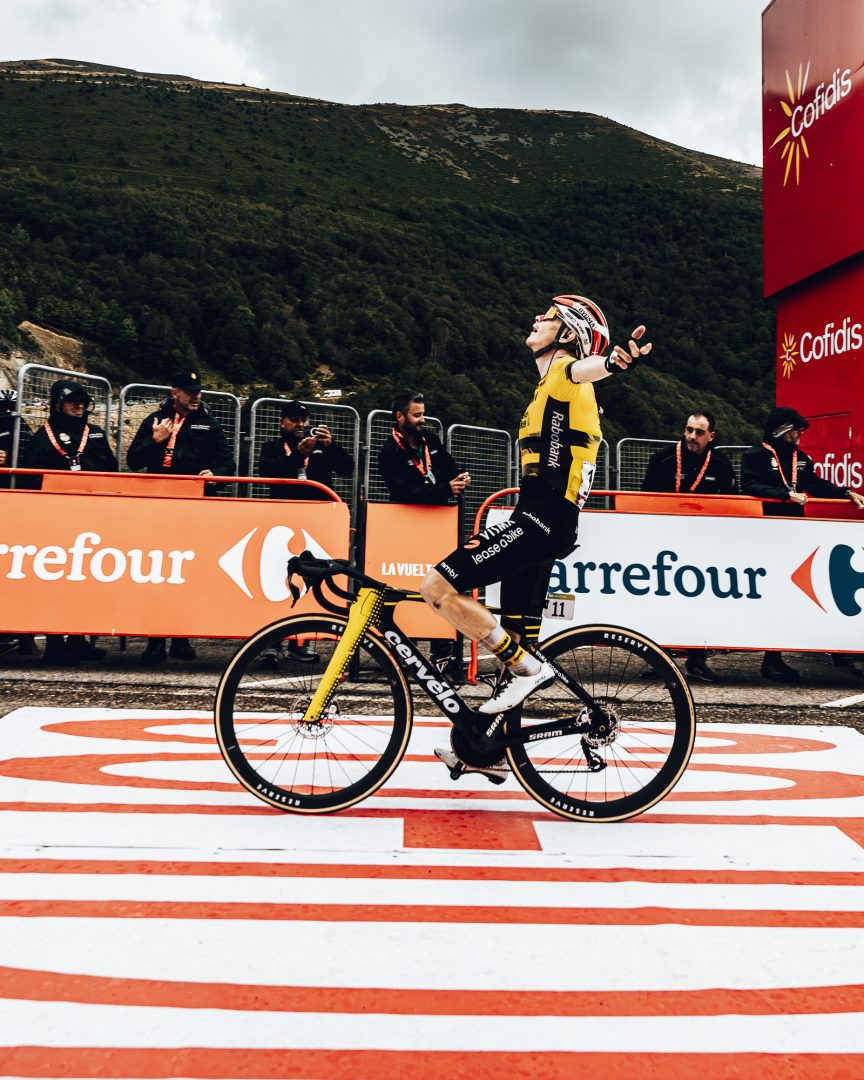
Starting from a foundation in nature photography, it’s inevitable that she sees landscapes and thinks that a bicycle is missing from every curve. “I’m not looking for a gesture, a light, an emotion, or a story, but mainly the frame”. She tells us that after each stage there is a detailed study of Google Maps. “I have it full of little dots. That’s the way I work, I like to have everything tied up. Even in the stage that passed through my village this year, I had them marked; it gives me security”, confesses Naike.
Logistics and excitement at La Vuelta
Unlike smaller events, where you have to do a bit of everything, the roles of official photographers in a Grand Tour are very clearly defined and organized. Some are responsible for sponsor visibility, others focus on showing key locations along the route, and others concentrate on the sporting aspect because, obviously, if there’s an attack, you have to be there.
“This year we have implemented a much more comfortable way of working. We carry a Starlink on the motorbike and upload the content directly to the server”. The team consists of three permanent photographers, one on rotation, and two remote editors. The latter surprises us; after all, everyone has their own style, not only behind the camera but also when editing. “It was very difficult for me to leave it in the hands of others. Shooting is perhaps the smallest part of taking a photo”.
In any case, covering the Vuelta year after year gives you a privileged perspective. What changes—in Naike, in the race, and above all in how she sees it—with each edition?
“I don’t think the way I work has changed, it’s even easier now, but I think it worked better before. Now I feel more confident and I know people, I interact with them… in that sense I’m much more comfortable. But on the other hand, I look at photos I took three years ago and they look different. I liked them better”. Perhaps she has simply become more critical, which she acknowledged when we mentioned it to her.
It can’t be easy. Cycling photography has something of war and poetry about it: cars, motorbikes, wind, dust… How does she find beauty amid so much movement? We asked her specifically about this year, which was perhaps extra difficult due to the protests. She confesses that it was very hard and made her feel insecure. “You didn’t know what was going to happen, where the stage was going to be canceled. There was so much uncertainty. You can have your own ideas, but you have to stick to the plan, so in a way, you also get caught up in the turmoil that is affecting the race. It was like, what do I shoot? What do I have to shoot?“ she said. She believes that this has been reflected in the results—we disagree. ”The day I’m totally happy with a photo, I think I’ll sell my cameras”. Perhaps never considering a job to be perfect is the only way to improve.
Training the eye
Considering that we live in an age where everyone has a cell phone, a camera, and takes photos, we asked her what really sets apart the professional eye at an event like the Vuelta.
“I couldn’t say, because I started out a bit like that too. Some people have a better eye for photos or videos, but then you see people with basic equipment doing incredible things. I think you can learn from everyone. I give my son a cell phone and he has a way of shooting and a point of view that I don’t have. There’s so much of yourself in every photo…”– Naike Ereñozaga
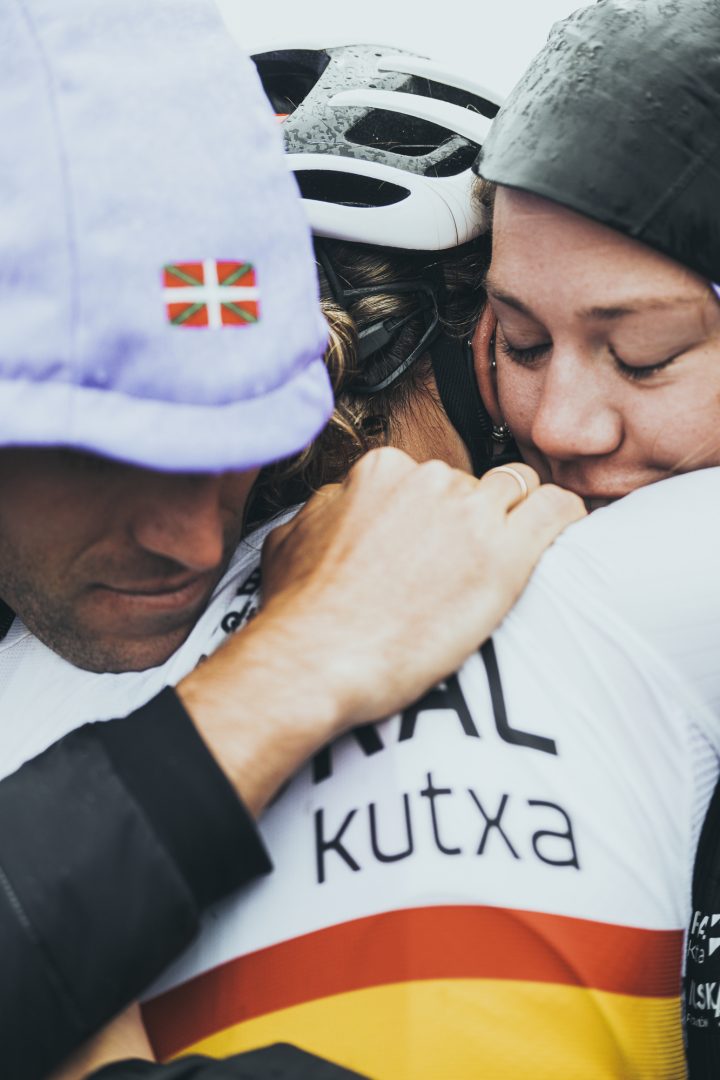
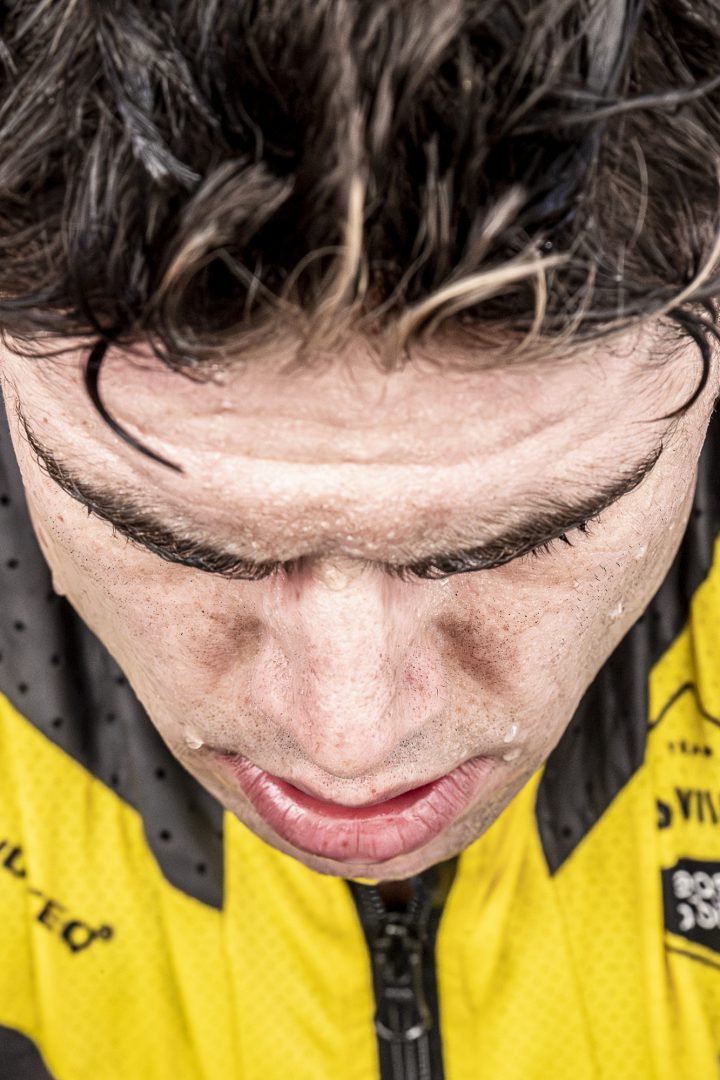
Naike’s photos show the suffering, but also the humanity of the cyclists. What interests her more, the epic nature or the fragility of the sport? She confesses that she can’t understand them separately. “It’s about moments”. And perhaps not always as organic as we might think. “It depends a little on how you’ve planned it. I usually think more about the landscape, but if it’s a finish line, you look for a different kind of emotion. That’s where the cyclist can become very fragile, you have to be very attentive and careful”.
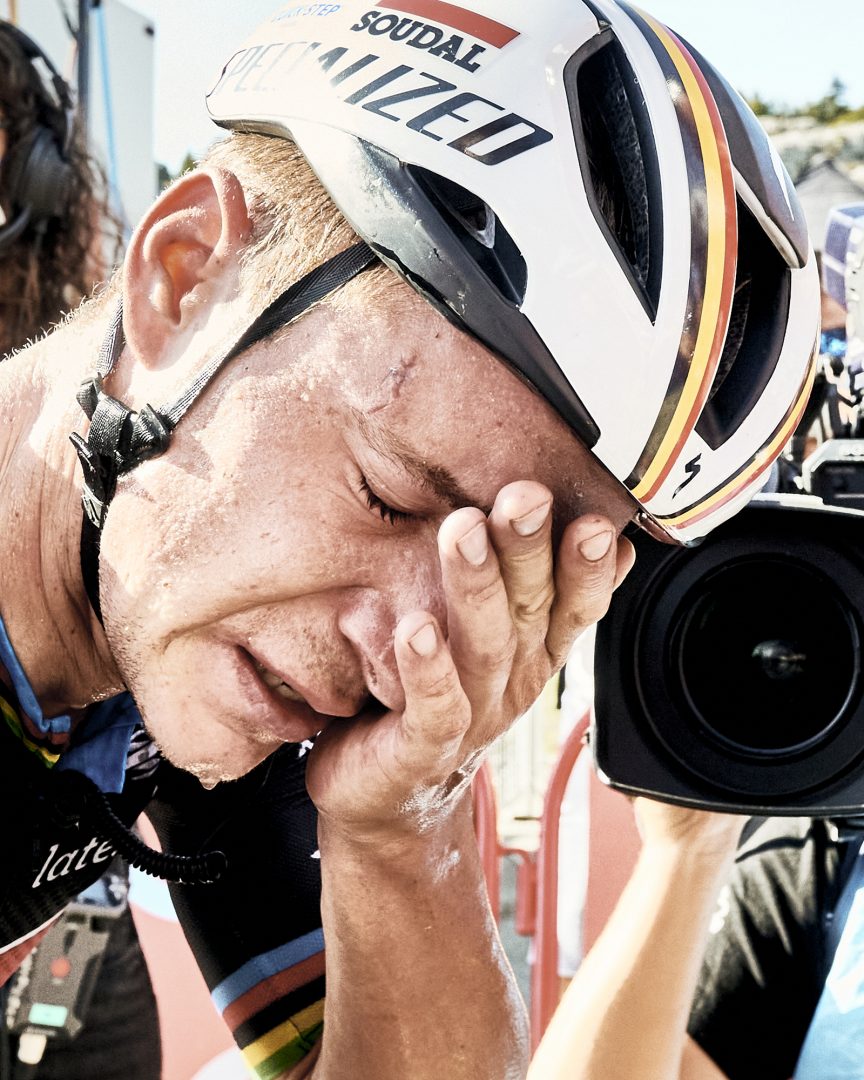
As Naike speaks, we visualize the post-finish line, one in particular. Stage 13 of La Vuelta in 2023. Remco redeems himself solo in Larra-Belagua after his collapse the previous day on the Tourmalet. “That day, it was my turn to capture the moment. My role was to run. We call it reactions“. The punch on the table he had just thrown prevented him from holding back the tears. ”I was taking the photo, and you have to try to fight with everyone to get the shot and not disturb him, because he’s crying. I’m very empathetic and I started crying too. With all the noise, for me there was silence. It’s something that happens to me a lot in cycling. When there’s a tense moment like that, I don’t hear anything, just him sobbing. Other photographers have told me they share that feeling, so it must be quite normal and I guess that’s a good thing”. This shows what this sport conveys. And… is that emotional or epic?
We also took the opportunity to ask her about LaVuelta Femenina. “I chat to everyone, but in the men’s race you can chat and get strange looks, while in the women’s race, if you joke around a bit, it turns into a party. Although they are totally professional, it’s a much more family-like atmosphere. Men’s cycling was like that in the 80s too“. We won’t say amateur, but accessible. ”I think that since COVID, it has become quite closed off, and often the riders don’t even get off the bus”.
We talk about how we would like it to evolve. Or how to prevent that freshness from being lost. But she sees change as something natural and inherent to professionalization. She sees Demi Vollering as a clear example. “It’s not that you can’t get her to smile now. She does. But not so many years have passed and suddenly she has a million-dollar contract that comes with much greater pressure”. Like Remco, they have built a shell that must be respected, because they may need it.
We imagine that this happens at all levels in some way. When something goes from hobby to profession, it can be hard to believe. Now we’re referring to her. Because even though there was no specific day that changed the paradigm, but rather a gradual evolution, the biologist Naike still has to remind herself from time to time that she coexists with the photographer Naike on her résumé. And sometimes, more often than she would like, she has to say no to events or races. Without going any further, the presentation of La Vuelta 2026 was held in Monaco some weeks ago and she wasn’t there. “I didn’t have any vacation days left”.
“You learn, you open doors, you try things, you meet people, and there comes a point when you think: could this be my only job? It’s not easy to take the leap”. But she allows herself to dream. About the Tour, about the Olympic Games. And even though imposter syndrome still comes to visit sometimes, “then you say, well, look at everything I’ve achieved… maybe it’s not just a coincidence.”